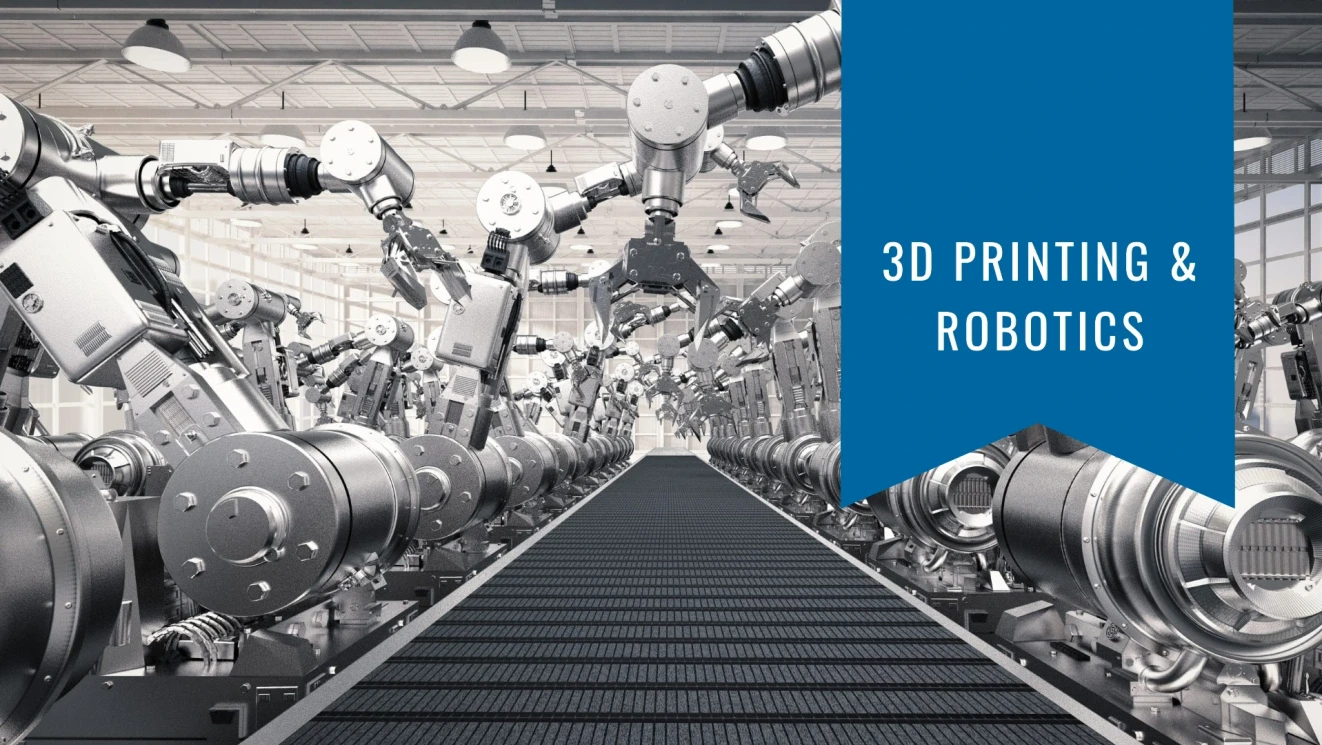
Traditional manufacturing methods have witnessed disruptions in the recent decades, in the form of either robotics or 3D printing (3DP). A convergence of these disruptive technologies, however, promises to change the future of Robotics & other industries as well.Companies engaged in manufacturing robots stand to benefit greatly from the inclusion of 3DP, in their business processes. Since most robots are required for unique applications, the ability of 3DP helps by speeding-up prototyping. This rapid prototyping helps designers, test new models faster & customize them according to customer or application requirement faster. The result, customized robots can be made available in the market faster, due to a faster product design process. 3DP can also help mass produce customized robot designs & meet the rising demand for higher personalization with relative ease.Robots, being often used for specific applications, require special tools for manufacturing them as well. This requirement of special tools to manufacture robotic parts with complex geometries, is readily fulfilled by 3D printing them. Different custom parts, for varied applications of the same robot can hence be easily created, by 3D printing them. Design engineers can not only 3D print tooling & fixtures for the robotic assembly process, but also use Design for Additive Manufacturing (DfAM) for new manufacturing methods. DfAM methods of making tools help reduce overall costs, by reducing the overall number of parts required because of hybrid machinery & processes. Using DfAM in robotic manufacturing helps reduce waste of raw materials, while increasing overall strength & durability of parts by eliminating potential failure points in robot designs. DfAM can also help fabricate entire robots or major parts of robots. With no prerequisite for molds, robots & robotic parts can be produced in smaller volumes, in rapid & economical fashion. Savings in time & money resulting from incorporating 3DP in assembly & manufacturing, can be diverted towards research & innovation to develop better robots. 3DP can also help repair robots with ease. By printing parts that need replacement ‘on-site’ or reverse engineering parts that are expensive to reproduce, repairing damaged robots is made efficient by 3DP. Robotic parts can also be re designed with ease, helping to build & improve on earlier designs. Including 3DP methods in robotic design & manufacturing helps turbocharge the entire supply chain, while making maintenance & repair robots easier. The convergence of these disruptive technologies promises a future of automation & efficiency for a host of industries.
Blogs
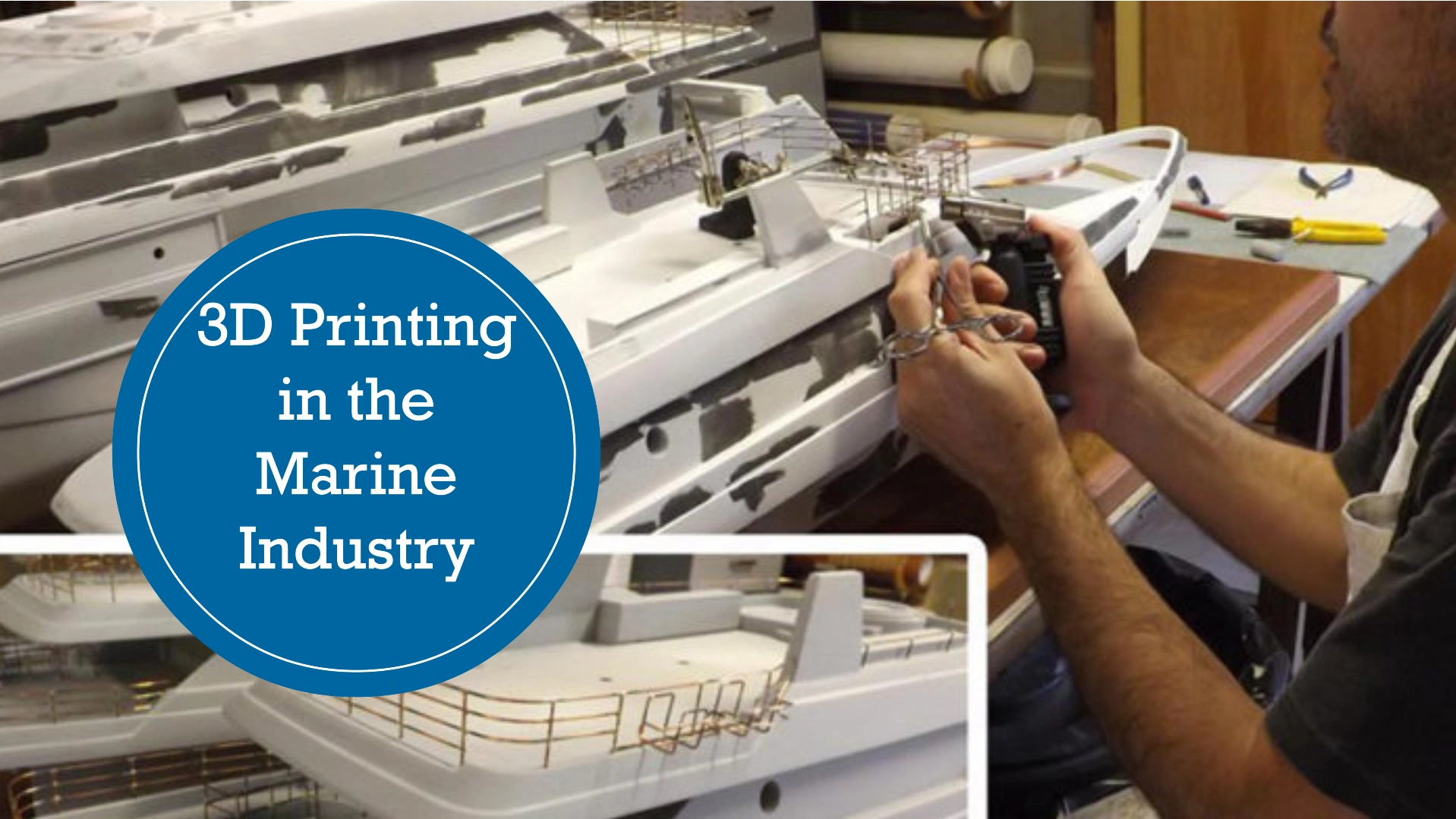
3D Printing has been a disruptive force across a wide range of industries for almost a decade. From the Automobile to Aerospace industry, 3D printing has inspired a rethink & reimagination of traditional ways of design, prototyping & manufacturing methods. This disruptive breach can also be seen in the Marine Industry.New Product Development, as usual, is the first victim of this disruption caused by 3DP in the marine industry. Whether it is the design of a ship’s interior or the shape of its hull, virtually designed models of these, can be rapidly 3D printed. Showcasing new designs of a ship’s interior or exterior, based on a certain operational profile, can also be achieved using the speed of 3D printing. 3DP also helps in fabrication of new tools, that can be used in making the actual manufacturing process faster. 3D printed sand molds can be used to make casted impellers, turbines & pump casings.Unleashing the creative side of making ships is not the only advantage 3DP brings to the marine industry. The clinical & rapid manufacturing of parts, using just the right amount of raw material makes it economical, to make custom designs, which under traditional methods would be economically unfeasible. This is particularly relevant in marine operations, where different ships are needed for unique climates & applications, making customization in terms of design & build material paramount. For example, ships intended for long voyages can be built with parts & designs that ensure minimum energy consumption, decreasing overall energy consumption of the ship. This is particularly relevant to aircraft carriers that rely on several nuclear reactors to fuel their voyages. 3D printing is known to reduce weight of parts, by printing whole them whole & making them lighter & stronger in the process. Reducing the weight of ships, by 3D printing major parts whole, allows them to carry more cargo, increasing their utility in a wide range of fields like shipping & defense. Wear & tear is a common occurrence in the marine sector, where ships are exposed to some of the harshest conditions on the planet. 3DP provides the advantage of repair services that are time & application sensitive. Parts of a ship that need replacement, can be 3D printed, in port, in a timely manner, facilitating longer service lives for ships that endure heavy wear & tear.Last but not least, reproducing parts that have been made obsolete, due to high costs associated with high traditional methods, is an easy thing to achieve with 3D printing. By scanning existing models of such parts, 3D printing can reproduce these at a fraction of the original cost & in a faster time frame. Although, 3D printing whole ships is still a distant reality, the infancy of 3D printing in the marine sector is poised to change it forever, upon maturity. The time when fleets will be 3D printed on demand is not far away. 3D Printing & the Marine Industry