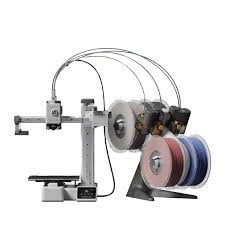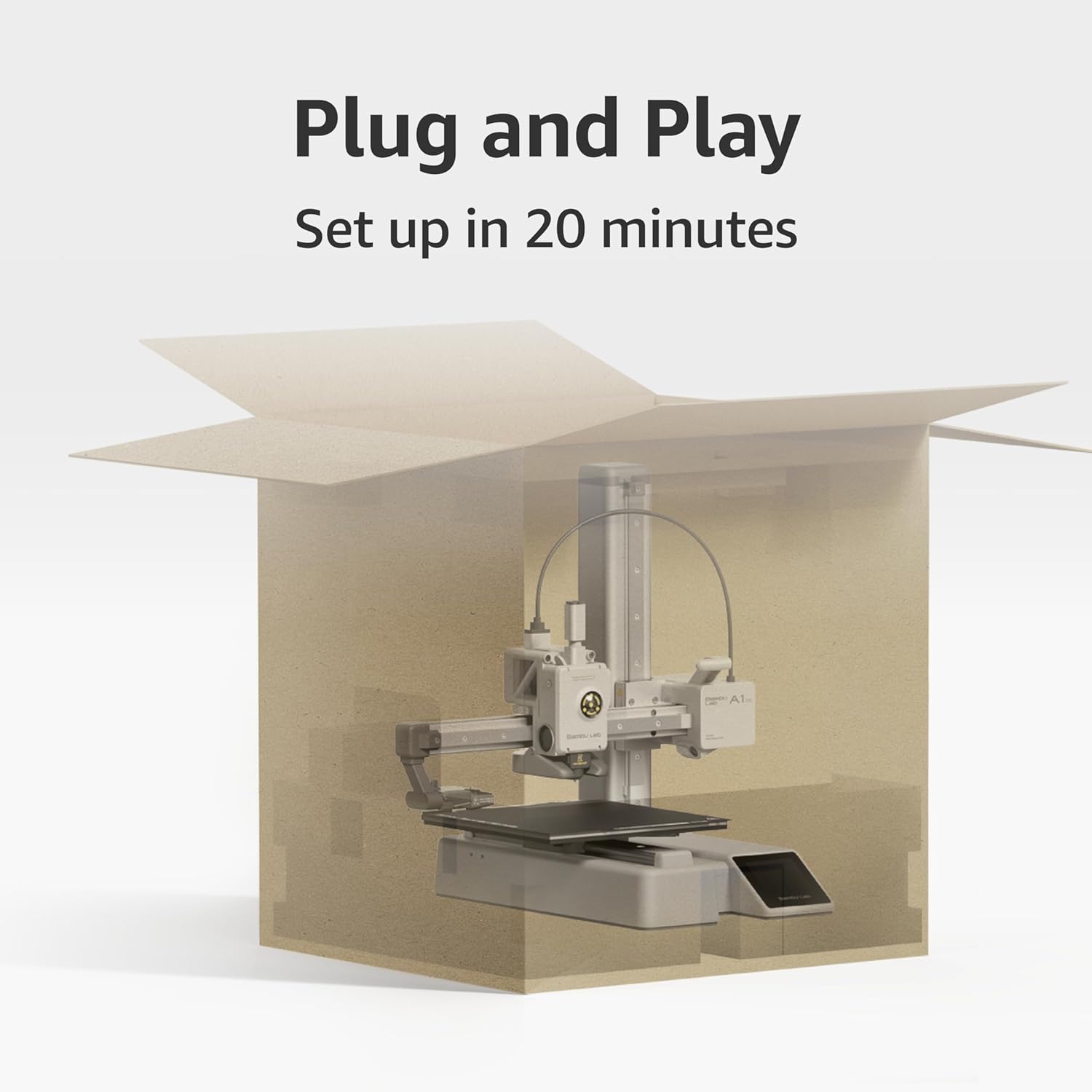


Buy 3D Printers Online in India

FDM | SLA | DLP | LCD — Starting From ₹14,949

Shop By Brand

India's Leading 3d printer store

3Idea Technology is India's leading 3D printer retailer, based in Mumbai. We stock the widest range of FDM, SLA, and DLP printers from Bambu Lab, Creality, Anycubic, Snapmaker, and more. Whether you're a hobbyist, educator, or industrial user, we offer EMI options, fast pan-India delivery, and manufacturer-backed warranty support.

Fast Shipping

7 Days Return Policy

Best Deals

Safe Transactions

Fast Shipping

7 Days Return Policy

Best Deals

Safe Transactions

Fast Shipping

7 Days Return Policy

Best Deals

Safe Transactions

Fast Shipping

7 Days Return Policy

Best Deals

Safe Transactions

Fast Shipping

7 Days Return Policy

Best Deals

Safe Transactions

Fast Shipping

7 Days Return Policy

Best Deals

Safe Transactions

Fast Shipping

7 Days Return Policy

Best Deals

Safe Transactions

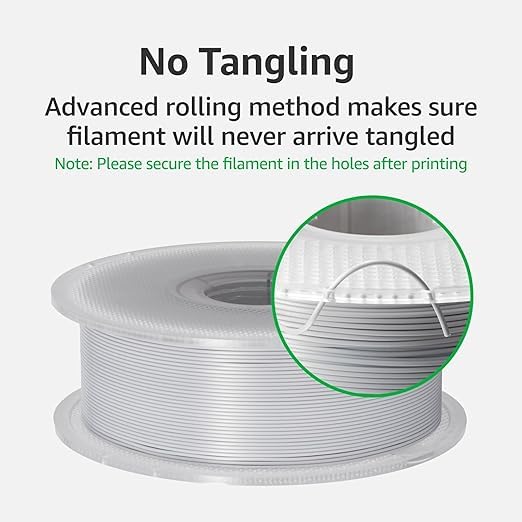
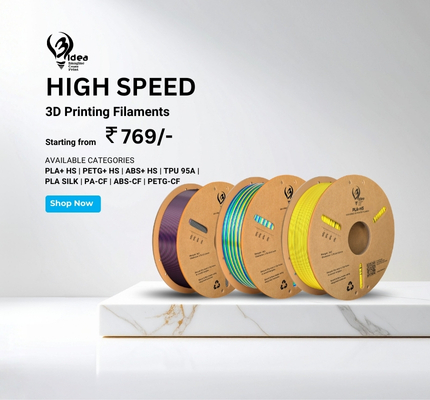
Filament Banner
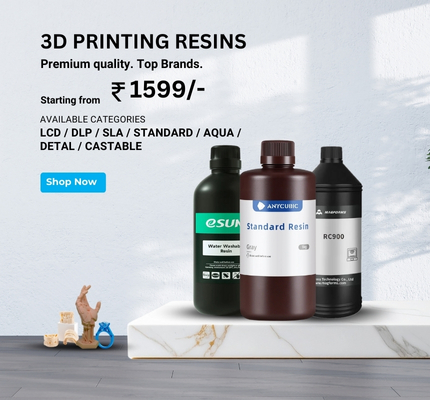
Resins Banner

Next Generation Trends

Discover expert advice, style inspiration, and product updates on our blog.

image
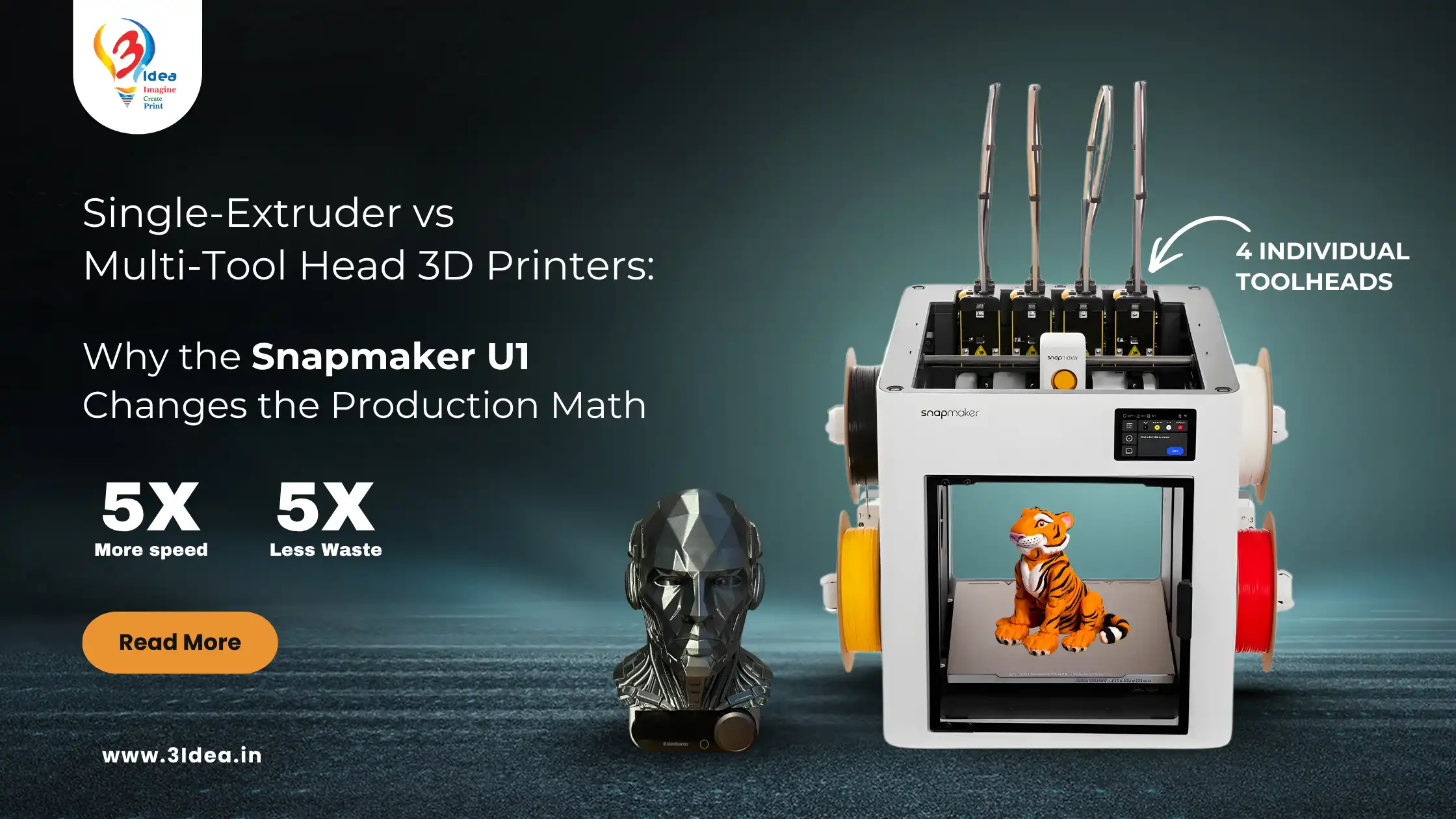
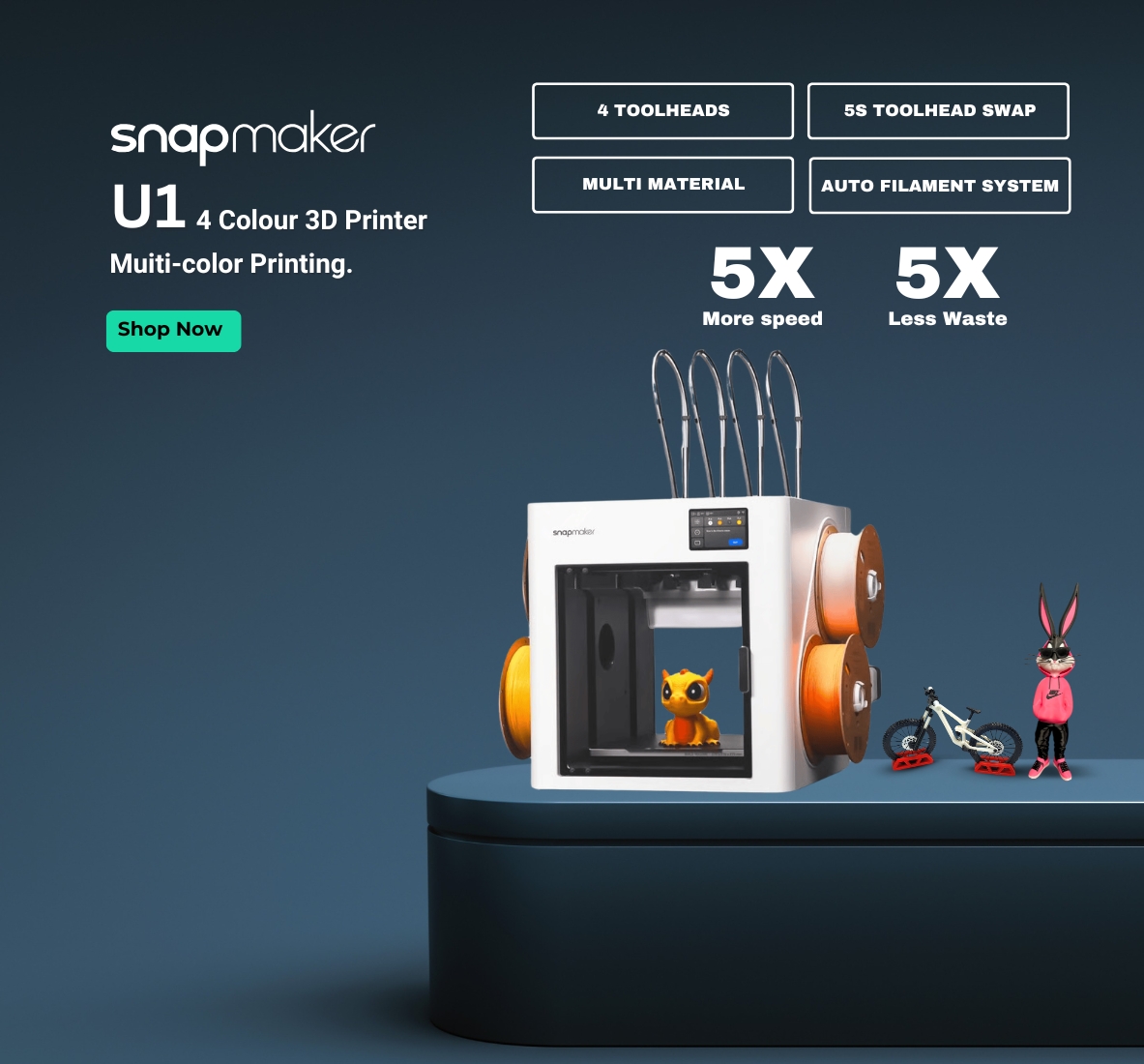
Single-Extruder vs Multi-Tool Head 3D Printers: Why the Snapmaker U1 Changes the Production Math

If you have ever watched a multi-colour print pause every two layers to purge filament, you already know the bottleneck. Single-extruder machines did the job for the first decade of desktop 3D printing, but multi-colour, multi-material work has outgrown what one nozzle can deliver. Tool-changing systems like the Snapmaker U1 close that gap — not by being marginally faster, but by eliminating the steps that wasted the time in the first place.This article walks through where single-extruder workflows actually break down, what a multi-tool head machine does differently, and the concrete numbers behind the swap.Where a single-extruder workflow breaks downThe single-extruder model has three structural costs that compound on any job involving more than one material or colour.Time lost to filament swaps. On a stock single-extruder machine, every colour change means retract, unload, load the next spool, purge to clear residue, and resume. Even at the optimistic end, that is 30–60 seconds per change. Across a 200-layer two-colour print with changes on most layers, you have added 1–2 hours of pure swap time before a single useful gram has been laid.Material lost to the purge tower. The purge tower is not optional waste — it is structural waste. A single nozzle has to fully clear the previous colour before it can lay down the next, and the only way to do that is extrude filament you will then throw away. On AMS-style systems running four colours, the purge tower routinely consumes 30–50% of the total filament for the print.Quality loss at the colour boundary. Even with a clean purge, residual filament in the melt zone creates colour bleed at every transition. Multi-colour prints often need post-processing or design compromises just to hide where one colour ends and another begins.Each of these has workarounds — slower print speeds, larger purge towers, careful colour planning — but they are workarounds, not solutions. The constraint is the single melt zone.What a multi-tool head printer does differentlyA multi-tool head printer carries multiple complete hotend assemblies and physically swaps which one is active during the print. Instead of purging one nozzle between colours, the printer parks the current head and picks up the next one — already loaded with its own filament, already at temperature.The mechanical consequence: zero filament needs to be purged to change colour, because the colour change is a mechanical handoff, not a thermal one. The colour boundary is sharp because no residual material crosses it.The Snapmaker U1 implements this through a coupled tool-head magazine and a quick-swap mechanism the company calls Snap-Swap. The active head docks, the next undocks, and printing resumes — in roughly the time a traditional machine would spend on a single retract.Head-to-head: where the numbers landThe three metrics that matter for production work — waste, swap time, and build volume — all move materially in favour of the U1.MetricTraditional single-extruderSnapmaker U1Purge waste per multi-colour print30–50% of total filamentUp to 80% lowerColour-change time30–60 seconds (purge + reload)~5 seconds (mechanical swap)Build volumeTypical 220 × 220 × 250 mm270 × 270 × 270 mmColour-boundary qualityResidual bleed at transitionsClean — no shared melt zone The build volume number deserves a separate note. The Snapmaker U1 prints a roughly 19.7-litre cube — about 50% more volume than a 220 × 220 × 250 machine. That changes what you can build in a single job, which in turn changes how many jobs you have to supervise.Snapmaker U1 — what is actually in the boxThe U1 is positioned as a desktop production machine rather than a hobbyist printer, and the spec sheet reflects that.•   Tool-head magazine: four independently loaded hotends, each retaining its own filament between jobs.•   Snap-Swap mechanism: mechanical tool change in roughly 5 seconds, with no purge required for colour transitions.•   Build volume: 270 × 270 × 270 mm — large enough for batch production runs of medium-sized parts.•   Material handling: supports PLA, PETG, ABS, TPU, and engineering filaments like PA-CF, with material profiles managed per tool head.•   Use cases: rapid prototyping where multiple materials are needed in one part, batch production where supervised reloads are a bottleneck, and multi-colour design work where waste and time both matter.For a detailed walk-through of the Snap-Swap mechanism, see the official Snapmaker U1 product page.What customers report after switchingThree of our customers who have run the U1 for at least a month — across hobby, prosumer, and small-business contexts — sent feedback that lines up with the spec sheet rather than contradicting it.“Machine works exceptionally good. Had my doubts initially with the tool-head mechanism, but the machine has outperformed expectations. Have printed approximately 500 hours in the last 1.5 months with minimum failures.”   — Binu K“I have had a really good experience with the Snapmaker U1 so far. The multi-nozzle setup for each colour is a big advantage, producing little to no filament waste compared to typical AMS systems. Print quality is impressive, and overall the pricing is decent compared to other multi-nozzle printers.”   — Siddharth Thakur“It is doing great and working as promised by the 3idea team. Huge shout-out to the team — I am already working with the Bambu Lab A1 and A1 Mini from them and planning to buy more of these. Thank you.”   — Gurpreet SainiTwo patterns stand out in this feedback. First, the reliability claim holds up — 500 hours of printing with minimum failures is a real production-grade number. Second, the comparison customers reach for is not other single-extruder machines; it is AMS-style multi-material systems on the Bambu Lab line. That is the right comparison to make.Who should — and should not — upgradeA multi-tool head printer is not the right answer for everyone. The honest framing is this:Worth the upgrade if you run multi-colour or multi-material prints regularly, value supervised production time at more than a few hundred rupees an hour, sell prints commercially, or run an education or prototyping setup where machine time is the bottleneck.Not yet worth it if you print mostly single-colour functional parts, do not value the additional 50 mm of build volume, or already have a multi-machine setup where adding capacity is more valuable than adding capability per machine. The U1 is a capability upgrade, not just a capacity one — its value scales with how often you actually use multi-material features.Bottom lineSingle-extruder printers are not obsolete — they are still the right tool for plenty of work. But for multi-colour and multi-material prints, the architectural ceiling on a single melt zone is real, and tool-changing systems clear it cleanly. The Snapmaker U1 puts the technology at a desktop price point with credible field reliability behind it.If your current machine is the bottleneck, check Snapmaker U1 availability and pricing on the 3idea product page.Frequently asked questions1. Is a multi-tool head printer actually faster than a single-extruder?Ans. For single-colour prints, no — both will deposit material at similar rates. For multi-colour or multi-material prints, yes, significantly. The saving is in eliminated purge cycles, not in faster motion. On a job with 50 colour changes, a single-extruder machine spends 25–50 minutes purging. A tool changer spends 4–5 minutes swapping.2. How much filament does the U1 actually save?Ans. Up to 80% reduction in purge waste on multi-colour prints versus AMS-style single-extruder systems. The exact saving depends on the print — designs with frequent thin-layer colour changes save more than designs with large single-colour zones.3. Can the U1 print engineering materials, not just PLA?Ans. Yes. It handles PLA, PETG, ABS, TPU, and carbon-fibre composites like PA-CF. Each tool head can carry a different material profile, so you can mix a structural body in PETG with TPU gaskets and supports in PLA in the same print.4. What about slicer support?Ans. The U1 uses Snapmaker Luban for native workflows, and it can be configured in third-party slicers like PrusaSlicer and OrcaSlicer for users who prefer those toolchains.5. Is it suitable for production environments?Ans. Field reports from customers running 400–500 hours a month suggest yes, with the usual caveat that any production setup needs a maintenance routine — nozzle inspection, bed levelling checks, and filament drying. The mechanical tool change adds one part to monitor, but reduces purge-tower failures, so the net maintenance load is comparable to a single-extruder machine.6. How does the U1 compare to Prusa XL or Bambu Lab X1C with AMS?Ans. The Prusa XL is the closest direct comparison — both are tool-changing systems, both target prosumers. The XL goes larger (360 × 360 × 360 mm) but costs roughly 2.5–3× more. The Bambu X1C with AMS is a different architecture: it is a single-extruder system with automated filament switching, so it has the purge-waste problem the U1 was designed to eliminate. If multi-material waste matters to your workflow, that distinction is the entire purchase decision.

Read more
image
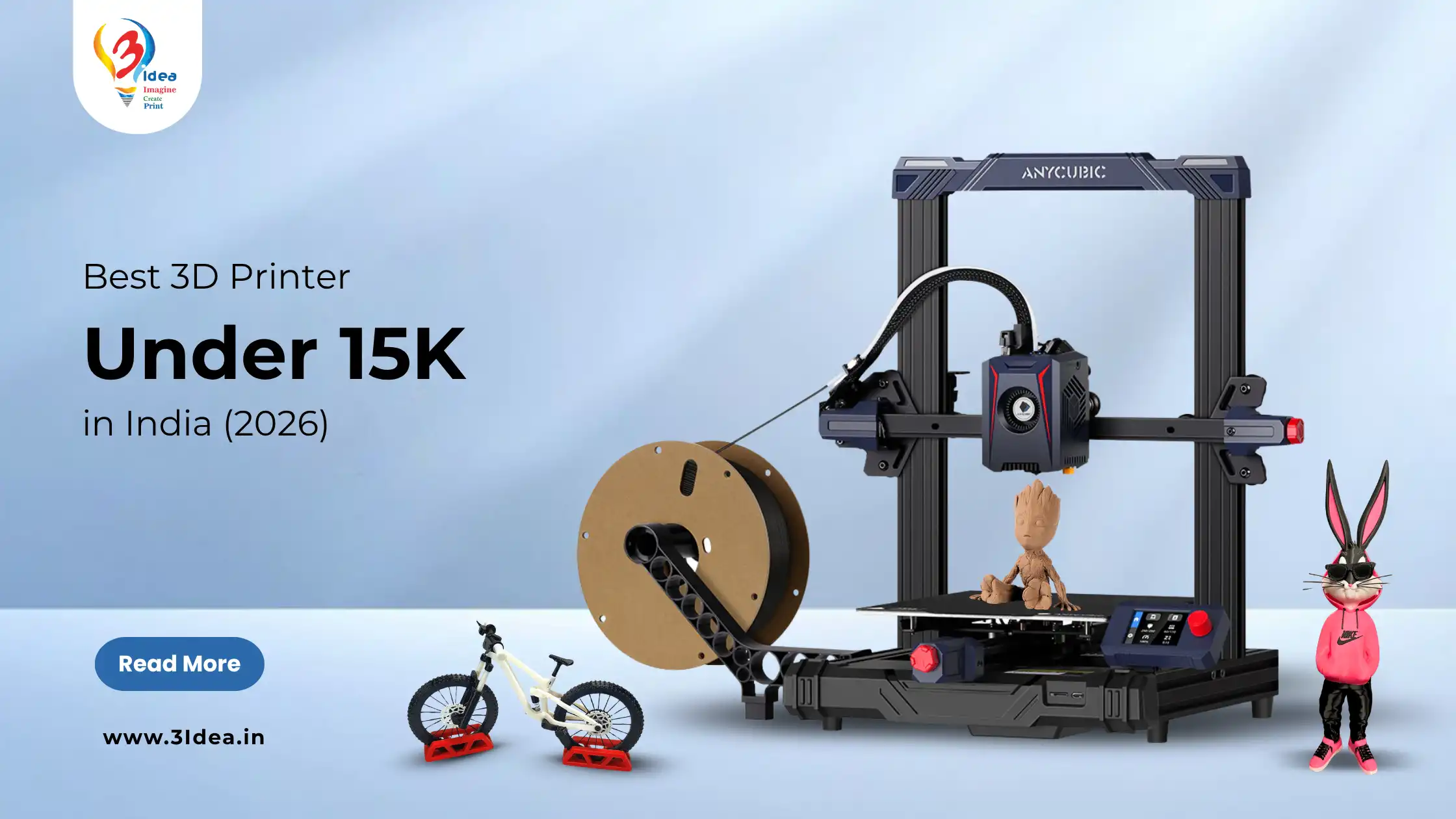
Best 3D Printer Under ?15,000 in India (2026)

Choosing a 3D printer on a tight budget can feel like a gamble. Most machines under ?15,000 cut corners somewhere, either on print quality, reliability, or essential features like auto bed levelling. The result: a frustrating first printer that ends up gathering dust.The good news is that 2026 has been a turning point for budget 3D printing in India. Manufacturers have packed genuinely useful features, high print speeds, auto-calibration, larger build volumes, into machines that comfortably sit under ?15,000. This guide walks you through the best budget 3D printer in India, what to check before buying, and how to make a confident choice.Quick Answer: The Best Budget 3D Printer in IndiaIf you only want the recommendation, here it is.Top pick, Anycubic Kobra 2 NeoThe Anycubic Kobra 2 Neo is the strongest entry-level 3D printer India users can buy today. It combines high-speed FDM printing, beginner-friendly auto-levelling, and excellent build quality at a price point that rarely disappoints. For most first-time buyers, it is the best 3D printer under ?15,000 available in 2026.A Quick Introduction to 3D Printing3D printing, formally called additive manufacturing, builds objects layer by layer from a digital design. Most printers in the under-?15,000 segment use FDM (Fused Deposition Modelling) technology, which melts plastic filament like PLA, PETG, or ABS and deposits it precisely to form parts.This technology has democratised prototyping. Students, hobbyists, educators, and small business owners now use desktop FDM printers to make functional parts, custom gifts, replacement components, and saleable products. An affordable 3D printer is no longer just a toy, it is a viable starting point for a small manufacturing or design business.The Business Opportunity Under ?15KThe global additive manufacturing market continues to grow at strong double-digit rates, and India is one of its fastest-growing regions. (Reference: Grand View Research, Additive Manufacturing Market.)A 3D printer priced under ?15,000 is now a serious entry point for entrepreneurs. With the right niche, custom keychains, miniatures, home décor, prototype parts for local engineers, a single budget machine can pay for itself in a few months. Many of India’s growing 3D-printing micro-businesses started exactly this way.The trick is choosing a machine that won’t bottleneck you as orders increase. That is precisely where the Anycubic Kobra 2 Neo stands out from its peers.Why the Anycubic Kobra 2 Neo Stands OutThe Kobra 2 Neo punches well above its price bracket. It delivers features that, only a generation ago, sat in printers costing three times as much.•          High-speed printing. The Kobra 2 Neo supports significantly faster print speeds than typical budget FDM machines, cutting print times for everyday parts.•          Beginner-friendly setup. It ships semi-assembled, with auto bed levelling that removes one of the most painful parts of owning a first 3D printer.•          Value for money. Few printers in the sub-?15K range match its combination of build quality, slicer compatibility, and consistent output.•          Reliable performance. Anycubic has built a strong reputation for repeatable, low-maintenance machines, and the Kobra 2 Neo continues that track record.If you are wondering is the Anycubic Kobra 2 Neo worth buying, the short answer is yes. It balances performance, price, and ease of use better than anything else in its segment.Anycubic Kobra 2 Neo, Key SpecificationsThe headline specs of the Anycubic Kobra 2 Neo (India pricing and availability via 3idea):•          Technology: FDM (Fused Deposition Modelling)•          Build volume: Comfortable medium-sized print area suitable for most functional and decorative parts•          Print speed: High-speed printing capability, well above legacy entry-level machines•          Filament compatibility: PLA, PETG, and ABS•          Bed levelling: Automatic bed levelling system•          Assembly: Semi pre-assembled, typically ready to print in under 30 minutesThese specs make it a genuinely usable workhorse rather than just a learning toy.What You Can Make With ItThe Kobra 2 Neo handles a wide range of personal and small-business projects:•          Prototyping, fast iteration on product ideas without expensive tooling•          Education, students learn CAD, slicing, and additive manufacturing on a real machine•          DIY & hobby, cosplay parts, replacement components, miniatures, organisers•          Small business, custom merchandise, gifts, and short-run manufacturingFor most users in India looking for a versatile, affordable 3D printer, this single machine covers the full spectrum.Use Cases for Beginners and Small BusinessesA clearer view of who this printer is for:•          Beginners get an easy-to-learn machine that does not require constant tweaking.•          Small businesses can take their first paid orders for prototypes, custom items, or product samples.•          Designers and engineers can validate ideas in hours rather than weeks.If you have been asking which 3D printer should I buy under ?15,000, the Anycubic Kobra 2 Neo answers most of the question on its own.Anycubic Kobra 2 Neo vs Other Budget 3D PrintersHow does it stack up against typical sub-?15K alternatives?In an apples-to-apples Anycubic Kobra 2 Neo vs other budget 3D printers comparison, it consistently wins on speed, reliability, and out-of-the-box experience. It is also a strong alternative to far more expensive machines, you get premium-class behaviour at a fraction of the cost.Cheap vs Expensive 3D Printers: What Actually Changes?Cheaper printers usually compromise on speed, reliability, and ease of setup. Expensive machines invest heavily in motion systems, sensors, and enclosed chambers for engineering materials. The Kobra 2 Neo sits at a happy middle, entry-level price, mid-range features, sub-?15K bracket. That is what makes it a smart first investment for most Indian buyers in 2026.Buyer’s Guide: What to Check Before Buying a 3D PrinterBefore you click buy, run through this checklist. It applies to any budget 3D printer in India, not just the Kobra 2 Neo.•          Build volume. Match it to the size of objects you intend to print. Most home and hobby prints fit comfortably in a 220 × 220 × 250 mm envelope.•          Print speed & layer resolution. Faster machines save hours per print; lower layer heights deliver smoother surfaces.•          Auto bed levelling. Auto-levelling drastically reduces the learning curve and failed first layers.•          Filament compatibility. PLA, PETG, and ABS support cover almost all entry-level use cases.•          Slicer compatibility. Check that the printer is supported by popular slicers like PrusaSlicer, Cura, and OrcaSlicer.•          Spare parts & service. Buy from a seller (like 3idea) that stocks original spare parts and offers after-sales technical support.These are the real features to look for in budget 3D printers, not just marketing specs.Common Issues in Cheap 3D PrintersThe pitfalls most cheap FDM printers share:•          Inconsistent first-layer adhesion•          Frequent re-levelling due to flexed beds•          Poor extruder reliability and clogging•          Limited spare parts availability in IndiaThe Anycubic Kobra 2 Neo, paired with Anycubic’s robust spare-part ecosystem on 3idea, minimises every one of these issues, which is exactly why it remains our pick.Entry-Level vs Professional 3D PrintersEntry-level machines (?10–25K) are designed for ease of use and learning. Professional desktop machines (?50K+) like the Bambu Lab P1S or Snapmaker U1 add enclosed chambers, advanced material support, AMS multi-colour systems, and faster CoreXY motion. The Kobra 2 Neo sits perfectly between these two worlds, entry-level price with surprisingly capable hardware.Final Verdict, Should You Buy It?If you want the best 3D printer under ?15,000 in India in 2026, the Anycubic Kobra 2 Neo is the safest, smartest choice. It combines speed, reliability, and beginner-friendliness in a way no competing machine quite manages at this price.For first-time buyers, students, hobbyists, and entrepreneurs starting a small print operation, this is the printer to start with.Get Your Anycubic Kobra 2 NeoReady to start your 3D printing journey?? Check Anycubic Kobra 2 Neo availability & pricing on 3idea: https://www.3idea.in/product-detail/anycubic-kobra-2-neo-3d-printerStart creating, learning, and building today, at a price that lets you grow into the technology rather than gambling on it.
Read more
image
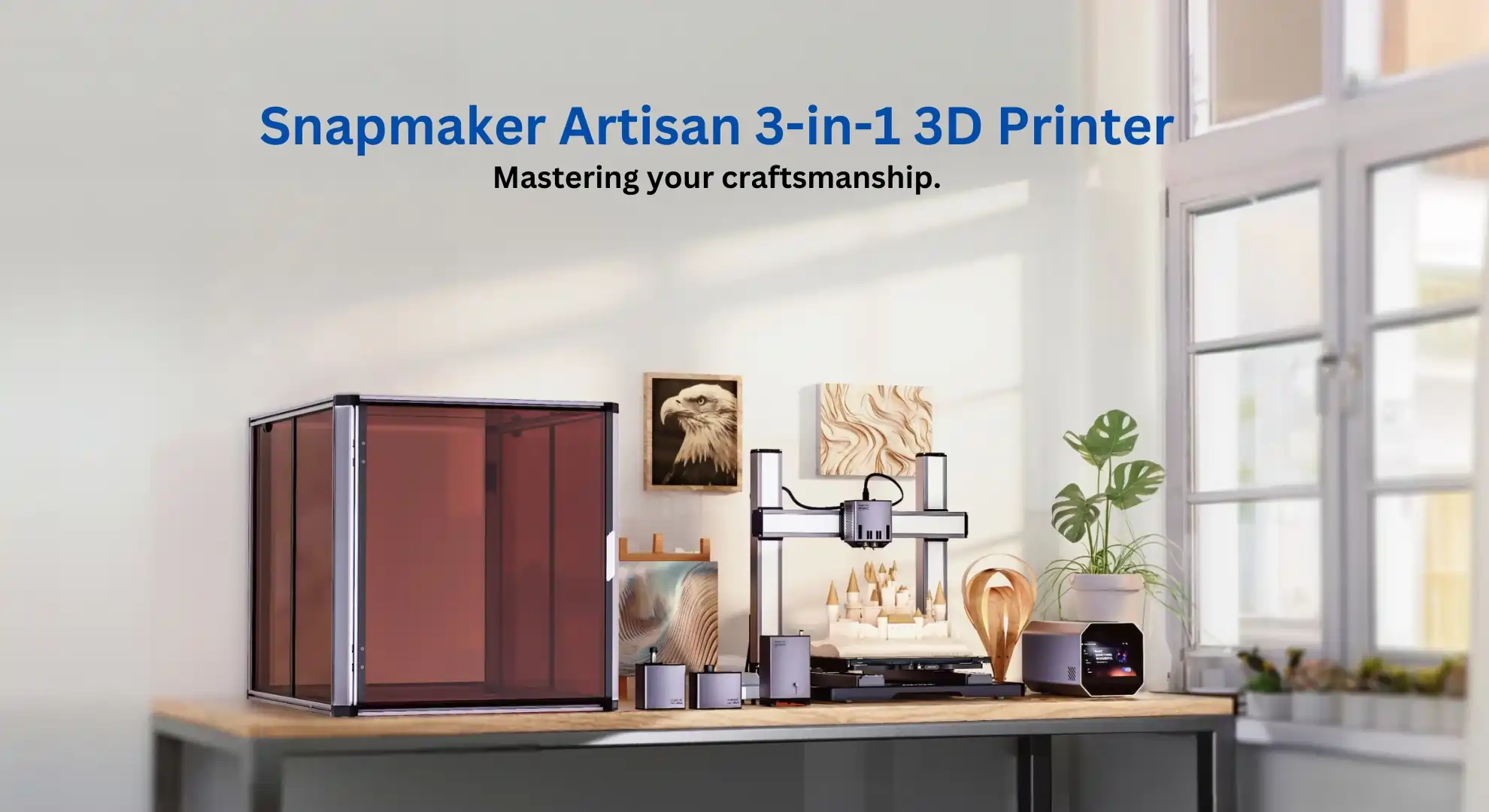
One Machine Does It All: Snapmaker Artisan – The Ultimate 3-in-1 Solution for Makers

In the world of creativity and innovation, having the right tools at your fingertips can make all the difference. Whether you're a professional engineer, an artist, a hobbyist, or a DIY enthusiast, the Snapmaker Artisan 3-in-1 3D Printer is here to revolutionize the way you work. This versatile machine combines three powerful tools into one sleek, modular design, offering unparalleled convenience and functionality. Let’s dive into why the Snapmaker Artisan is the ultimate 3-in-1 solution for all your creative and professional needs.One Machine, Endless Possibilities The Snapmaker Artisan 3-in-1 3D Printer is not just a 3D printer—it’s a complete workshop in one compact device. With its innovative modular design and one-minute quick-swap functionality, it seamlessly integrates three essential tasks: 3D Printing: Bring your ideas to life with high-precision 3D printing. Whether you're prototyping a new product or creating intricate models, the Artisan delivers exceptional detail and reliability. Laser Engraving and Cutting: From personalized gifts to intricate designs, the laser module allows you to engrave and cut materials like wood, leather, and acrylic with ease. CNC Carving and Cutting: Perfect for crafting detailed designs on harder materials like wood, metal, and plastic, the CNC module opens up a world of possibilities for makers and professionals alike.     Multifunction Mode- Using Three Different Functional Modules for A Complex ProjectThis 3-in-1 functionality means you no longer need multiple machines cluttering your workspace. The Snapmaker Artisan 3-in-1 3D Printer does it all, saving you time, space, and money.One Machine for Every PassionThe Snapmaker Artisan 3-in-1 3D Printer is designed to cater to a wide range of interests and skill levels. No matter what your passion is, this machine has something to offer: Prototyping & Engineering: Engineers and product designers can use the Artisan to quickly prototype ideas, test concepts, and refine designs with precision. Art & Design: Artists and designers can explore new mediums, create intricate patterns, and produce stunning works of art with the laser and CNC modules. Hobby & Craft: For hobbyists, the Artisan is a dream come true. Whether you're into model building, jewelry making, or custom crafts, this machine empowers you to bring your imagination to life. DIY Projects: DIY enthusiasts can tackle a variety of projects, from home decor to custom furniture, with the versatility of the Artisan’s three functions.Why Choose Snapmaker Artisan? Modular and User-Friendly: The quick-swap design allows you to switch between functions in just one minute, making it easy to transition between tasks without hassle. High Precision and Performance: With advanced technology and robust construction, the Artisan delivers professional-grade results every time. Space-Saving Design: Instead of investing in multiple machines, the Artisan consolidates your workspace while offering the same capabilities. Perfect for All Skill Levels: Whether you're a beginner or an experienced maker, the Artisan’s intuitive interface and comprehensive support make it easy to get started.Unlock Your Creativity TodayThe Snapmaker Artisan 3-in-1 3D Printer is more than just a tool—it’s a gateway to endless creativity and innovation. By combining 3D printing, laser engraving, and CNC carving into one machine, it empowers you to explore new possibilities and bring your ideas to life like never before.Ready to take your projects to the next level? Discover the Snapmaker Artisan 3-in-1 3D Printer today and experience the ultimate 3-in-1 solution for all your creative and professional needs.Whether you're a professional looking to streamline your workflow or a hobbyist eager to explore new creative horizons, the Snapmaker Artisan 3-in-1 3D Printer is the perfect companion for every maker. Don’t miss out on the opportunity to own a machine that truly does it all!

Read more
image
The Importance of Low-Cost Color 3D Printers: Revolutionizing Accessibility and Creativity

In recent years, 3D printing has evolved from a niche technology to a mainstream tool used by hobbyists, educators, and professionals alike. One of the most exciting advancements in this space is the introduction of low-cost color 3D printers, which are making high-quality, multicolored prints more accessible than ever before. Whether you're a beginner or a seasoned 3D printing enthusiast, the importance of these affordable color 3D printers cannot be overstated. They are democratizing innovation, creativity, and learning across industries.Why Low-Cost Color 3D Printers MatterThe demand for affordable color 3D printers is growing as more people recognize the value they bring to various fields. Here are a few key reasons why these machines are making a significant impact:1. Affordability and AccessibilityTraditional color 3D printers can be prohibitively expensive, especially for small businesses, schools, and individual creators. Low-cost options remove this barrier, allowing more people to access the technology. By keeping prices down, these printers ensure that creativity and innovation are not limited to large corporations or elite institutions.2. Enhanced Creative PotentialColor 3D printers open up new creative avenues. Whether it’s for product prototyping, model making, or educational purposes, the ability to print in color allows for more realistic and visually appealing designs. This is especially valuable for fields like architecture, engineering, and fashion, where color accuracy and design aesthetics are crucial.3. Educational ApplicationsAffordable color 3D printers are revolutionizing education by enabling students to bring their projects to life in vivid detail. From creating anatomical models in biology to printing ancient artifacts for history lessons, students can gain hands-on experience that enhances learning. Additionally, educators can use 3D printing to teach complex concepts in an interactive and engaging way.Key Features to Look for in a Low-Cost Color 3D PrinterWhen considering a low-cost color 3D printer, it’s essential to evaluate the following features: Print Speed: Faster printers can produce more objects in a shorter time, which is critical for high-output environments. Filament Compatibility: Ensure the printer supports a variety of materials like PLA, ABS, and PETG to offer flexibility for different projects. Multi-Color Capabilities: Some low-cost models can print multiple colors in a single pass, either through dual-extrusion systems or specialized filaments. Top Industries Benefiting from Low-Cost Color 3D Printers1. Product Design and PrototypingAffordable color 3D printers allow small businesses and independent designers to create detailed, colored prototypes without breaking the bank. This speeds up the product development process and allows for more experimentation before moving into production.2. Healthcare and Medical ResearchIn healthcare, 3D printing is being used for everything from prosthetics to custom medical devices. Color printing enables more accurate modeling, particularly for educational purposes and patient-specific models that improve both diagnosis and treatment planning.3. Education and STEM LearningAs mentioned, low-cost color 3D printers are becoming essential in classrooms, where students can design and print their projects, engaging with the STEM (Science, Technology, Engineering, Math) curriculum in a hands-on manner.Conclusion: The Future of 3D Printing is Bright (and Colorful)Low-cost color 3D printers are transforming the way we approach design, education, and manufacturing. By making this powerful technology more accessible, they are fueling creativity and innovation across multiple industries. As 3D printing continues to evolve, expect to see even more affordable options with advanced features that make multicolor printing the norm.Printed with one of the latest Color 3D Printer: - Anycubic Kobra 3 ComboIf you're looking for a powerful, affordable color 3D printer with advanced features, the Anycubic Kobra 3 Combo is a game-changer. This 3D printer supports multi-color 3D printing, offers speeds up to 600mm/s, and is compatible with a wide range of filaments like PLA, PETG, and TPU. Whether you're a hobbyist or a professional, the Kobra 3 Combo is designed to bring your creative ideas to life with unmatched precision. 

Read more
image
Benefits of cleaning filament

Cleaning filament is a specialized type of filament used in 3D printing to clean and maintain the printer's nozzle. It is designed to help clear out residual materials and debris from previous prints, ensuring smooth and reliable extrusion for new prints. Here’s a comprehensive overview of cleaning filament:Purpose:                                                                   Remove Residual Material: Helps push out old filament residues from the nozzle to prevent clogs and maintain print quality. Prevent Clogs: Regular use clears debris and build-up that can obstruct filament flow. Prepare for New Filaments: Ensures the nozzle is clean when switching between filament types or colours, reducing contamination and ensuring proper extrusion. Key Features: Abrasive Properties: Contains elements or textures to dislodge and push out leftover filament. Temperature Range: Operates within melting temperatures of common filaments, typically 180°C to 250°C. Flexibility: More flexible than standard filaments to better conform to the nozzle and remove residues. How to Use Cleaning Filament: Preheat the Nozzle: Set to the recommended temperature for the cleaning filament. Insert and Extrude: Load the filament into the extruder and start extrusion to push out old material. Monitor the Process: Continue until clean, consistent output is observed. Repeat if Necessary: For stubborn residues, repeat the process. Cool Down: Allow the nozzle to cool before starting a new print or changing filament. When to Use: Routine Maintenance: Periodically to keep the nozzle in good condition. Before Changing Filaments: To avoid contamination between different filament types or colours. During Print Issues: If experiencing extrusion problems or clogs. Post-Long Prints: After extensive print jobs that may leave significant residue.  

Read more
image
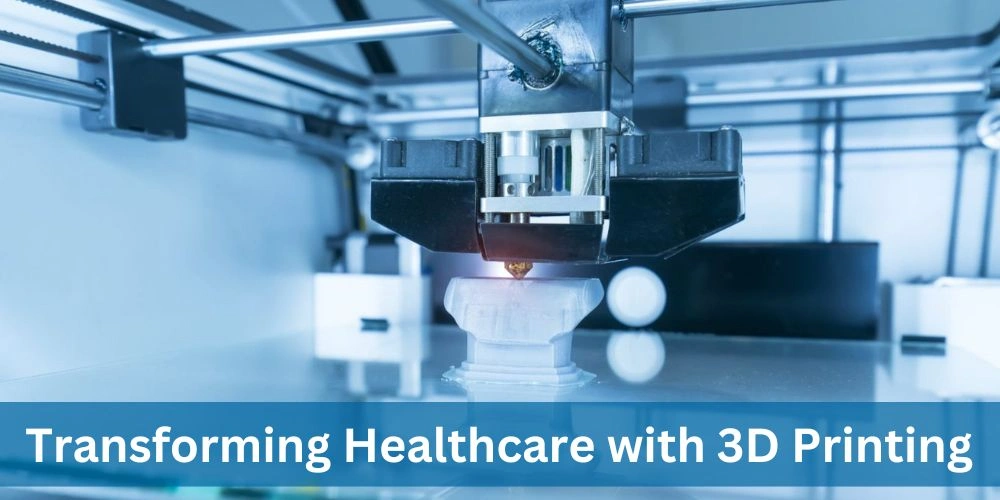
Transforming Healthcare with 3D Printing

The healthcare industry is undergoing a remarkable transformation, thanks to the revolutionary advancements in 3D printing technology. Instead of using regular molds, doctors can now use 3D printers to make special parts for people, like fake arms and legs that move (prosthetics). This is making a big difference in people's lives. Scientists are also looking into using 3D printing to one day make replacement organs for people who need them. Imagine a world where customized medical implants, prosthetics, and even human tissues can be created with precision and speed. This is the promise of 3D printing in healthcare. This article will explore how this technology is revolutionizing the healthcare industry and changing lives for the better.How 3D printing is changing Healthcare?Personalized Prosthetics: One of the most significant advancements in 3D printing is the ability to create personalized prosthetic limbs. Traditional prosthetics are often expensive and may not fit perfectly, leading to discomfort. With 3D printing, prosthetics can be customized to fit the individual perfectly, improving comfort and functionality.Medical Models: Surgeons can now use 3D-printed models of a patients anatomy to plan complex surgeries. These models provide a detailed and accurate representation of the patients anatomy, allowing surgeons to practice and refine their techniques before the actual surgery, leading to better outcomes.Organ Printing: Perhaps the most groundbreaking application of 3D printing in healthcare is the ability to print organs. While this technology is still in its early stages, researchers have successfully printed tissues and small organs such as kidneys and livers. This has the potential to revolutionize organ transplantation, reducing the wait times for patients in need of a transplant.Dental Applications: 3D printing is also making waves in the field of dentistry. Dentists can now create custom-made dental implants, crowns, and bridges with 3D printing technology, improving the accuracy and fit of these devices.Why It MattersEndless Opportunities: The technology is opening doors to customizable healthcare solutions, making treatments and recovery processes faster and more efficient.Personalized Treatment: Each patient can receive care that's specifically designed for their body and health needs.3D printing is making waves in the medical field, offering innovative solutions and bringing a new era of personalized healthcare.The Reality of 3D Printing in HealthcareThe application of 3D printing technology within the healthcare industry has garnered significant interest due to its potential to revolutionize medical care. However, it's crucial to maintain a balanced perspective on its current capabilities.While 3D printing offers exciting possibilities for creating personalized medical devices and prosthetics, there are ongoing challenges that require further development.Here's a closer look at the current state of 3D printing in healthcare:Benefits and Current Applications:Customization: 3D printing excels at creating patient-specific solutions. Medical scans can be used to design and print prosthetics that perfectly fit a patients unique anatomy, leading to improved comfort, functionality, and faster recovery times.Rapid Prototyping: 3D printing allows for the rapid creation of prototypes for medical devices and surgical tools, facilitating faster development cycles and improved design iteration.Anatomical Models: 3D printed models of bones, organs, and other anatomical structures can be invaluable for surgeons in pre-surgical planning, leading to potentially improved surgical outcomes.The impact of 3D printing on the healthcare industry cannot be overstated. From personalized prosthetics to organ printing, this technology is revolutionizing the way healthcare is delivered. As 3D printing continues to advance, we can expect even more groundbreaking innovations in the field of healthcare.FAQs:Q: How accurate are 3D-printed medical models?A: 3D-printed medical models are highly accurate and provide surgeons with a realistic representation of the patients anatomy.Q: Is 3D printing safe for medical applications?A: Yes, 3D printing is considered safe for medical applications when used appropriately and with the right materials.

Read more
image
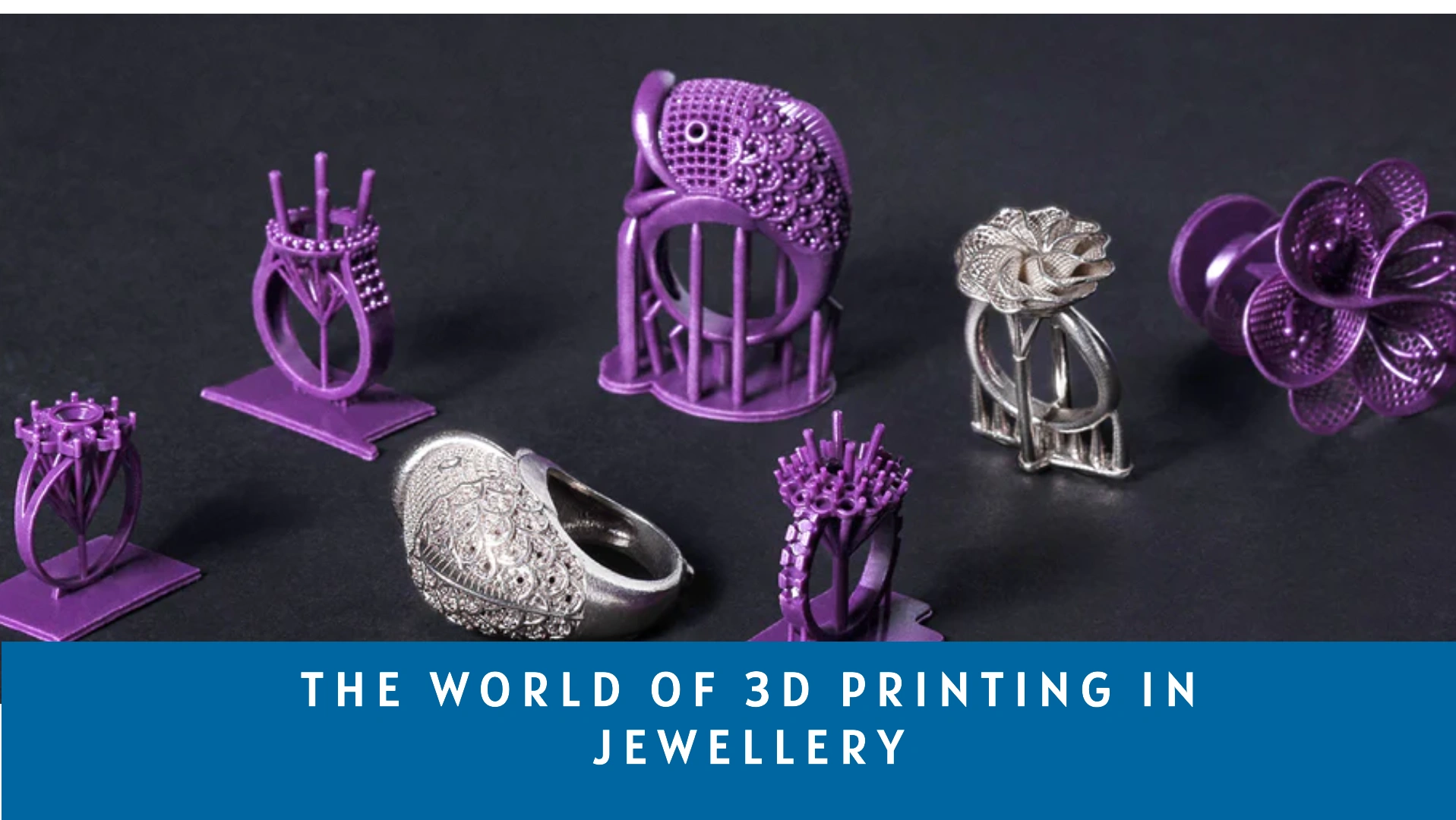
The World of 3D Printing in Jewellery

Welcome to the amazing world of 3D printing in jewelry! Technology has changed the way beautiful jewelry is made. 3D printing lets designers create incredibly detailed and unique pieces in a whole new way. It's a mix of old-fashioned skill and new technology, allowing designers to make custom designs and be more eco-friendly. The blog discusses the impact of 3D printing on the jewelry industry, highlighting its influence on design, customization, materials, sustainability, and more. Let's find out how 3D printing is changing jewelry-making and why it's exciting for everyone involved.What makes 3D printing unique in jewelry?3D printing revolutionizes the jewelry-making process in several unique ways, making it stand out from traditional methods:1. Customization: It allows for a high level of customization, enabling designers to create complicated, unique designs that were previously difficult or impossible to achieve through traditional methods. This opens up a world of possibilities for personalized and one-of-a-kind pieces.2. Complex geometries: The technology enables the creation of jewelry with highly complex geometries and intricate details that would be extremely challenging or even impossible to produce using traditional techniques. This offers designers the ability to push the boundaries of creativity and craftsmanship.3. Reduced material waste: Unlike traditional jewelry-making processes that often result in significant material wastage, 3D printing can be more resource-efficient, as it allows for precise material usage, reducing waste and supporting sustainability efforts in the industry.4. Faster prototyping: 3D printing streamlines the prototyping process, allowing designers to quickly iterate and test new designs without the need for extensive manual labor, thus accelerating the product development cycle.5. Accessible production: With 3D printing, jewelry-making becomes more accessible to a broader range of designers and artisans, as the technology reduces the barriers to entry, particularly for those looking to create small-batch or custom pieces.Unleashing Creative Freedom:3D printing gives jewelry designers more freedom to be creative. Unlike traditional methods with certain limitations, it allows designers to imagine and create more complex shapes and intricate details. With the help of computer software, designers can easily bring their ideas to reality. This technology empowers them to go beyond the usual and create jewelry designs that were previously impossible to make using traditional methods.  Customization and Personalization:With 3D printing, jewelry can be customized to match each person's style. This means customers can get involved in the design process and ask for exactly what they want, like the size, shape, and placement of gemstones. They can even add personal touches to make the piece truly unique. This way, every jewelry item becomes one-of-a-kind, making it extra special for the person wearing it.  Can customers provide design specifics?Yes, customers can actively participate in the design process regarding 3D-printed jewelry. They have the opportunity to provide specific design requirements such as size, shape, gemstone placement, and material preferences, and even incorporate personal elements into their custom piece. This level of customer involvement ensures that each jewelry item is tailored to their unique preferences, making it truly one-of-a-kind and meaningful to the wearer.  Can they choose materials?Yes, customers can indeed choose the material for their 3D-printed jewelry. With a wide range of materials available for 3D printing, such as various metals, resins, and even specialty materials like precious metals, customers have the flexibility to select the material that best suits their preferences and requirements. This freedom to choose the material adds another layer of personalization to the jewelry, allowing customers to create pieces that are not only visually stunning but also align with their preferences for durability, aesthetics, and value.  Rapid Prototyping and Iterative Design:Making jewelry samples used to be slow and expensive. Now, 3D printing lets designers create quick and exact models. This helps them see how the jewelry looks, make changes, and get it perfect before making a bunch. It saves time, money, and ends with happier customers!How does 3d printing in jewelry production contribute to customer satisfaction? 3D printing in jewelry production contributes to customer satisfaction in several significant ways:1. Customization and Personalization: It enables customers to actively participate in the design process, allowing them to provide specific design requirements and incorporate personal elements into their jewelry pieces. This level of customization ensures that each piece is tailored to the individual's unique preferences, leading to higher customer satisfaction through personalized jewelry. 2. Design Flexibility: With this technology, jewelry designers can create intricate and unique designs that were once unattainable through traditional methods. The ability to produce a diverse range of designs that cater to different tastes and styles increases customer satisfaction by offering a wider selection of options to choose from. 3. Quality Assurance: The iterative design process facilitated by it ensures that jewelry pieces undergo thorough refinement and testing before production, resulting in high-quality, well-crafted items that meet or exceed customer expectations. This commitment to quality contributes to customer satisfaction and trust in the brand. 4. Visual Representation: Through this technology, designers can create precise physical prototypes that provide customers with a realistic representation of the final jewelry piece. This visual representation helps customers make more informed purchasing decisions and fosters confidence in the product they are ordering. 5. Reduced Lead Times: The rapid prototyping capabilities shorten the design and production timeline, allowing customers to receive their customized or personalized jewelry in a more timely manner. This efficiency contributes to customer satisfaction by delivering products within shorter lead times.Material Variety and Innovation:3D printing provides a wide range of materials for making jewelry.  In jewelry production, a wide variety of materials can be utilized to create unique and innovative pieces. Some of the common types of materials used include:1. Precious Metals:   Gold  Silver  Platinum 2. Non-Precious Metals:  Brass  Bronze 3. Resin:Resin materials offer a range of colors and finishes, suitable for intricate designs and detailed pieces.4. Ceramics:Ceramic materials provide a unique look and feel, allowing for the creation of delicate and refined jewelry pieces.5. Composite Materials:Composite materials combine elements to achieve specific properties, enabling designers to experiment with textures and structures.6. Specialty Metals:Materials like titanium or stainless steel can also be used to create modern and durable jewelry pieces.Sustainable and Environmentally Friendly:Jewelry-making can be wasteful! Lots of leftover materials get thrown away. But 3D printing is like a special kind of printer that builds jewelry piece by tiny piece, wasting less material. This cool tech helps make pretty jewelry in a way that's better for the environment!Can you explain layer by layer?Layer-by-layer is a fundamental concept in 3D printing that refers to the systematic process of building an object one thin layer at a time. Here's a detailed explanation of how layer-by-layer printing works in 3D printing:1. Digital Design: The process begins with a digital 3D model of the object that needs to be printed. This design serves as a blueprint for the printer to follow during the printing process.2. Slicing: The 3D model is sliced into numerous horizontal layers by specialized software. Each layer is like a slice showing a different part of the finished object.  3. Printing Process: The 3D printer begins by making the first layer of the object right on the build platform. It does this by depositing or curing the printing material (such as plastic, resin, or metal) in a specific pattern based on the sliced design.4. Layer Bonding: Once the initial layer is completed, the printer moves on to the next layer, building on top of the previous one. The material in each layer fuses or adheres to the layer below it, creating a strong bond between the successive layers.5. Repetition: The printer repeats the process of depositing and solidifying material layer by layer, following the precise instructions from the sliced design. This step-by-step process keeps going until the whole object is finished.6. Complex Structures: Layer-by-layer printing allows for the creation of complex geometries and intricate designs that would be challenging or impossible to achieve with traditional manufacturing methods. Each layer contributes to the overall structure of the object, leading to the gradual formation of the final three-dimensional shape.Can small jewelers afford 3D printers?Yes, small jewelers can afford 3D printers due to the decreasing costs and increasing accessibility of this technology. Entry-level desktop 3D printers are now more affordable, making them within the reach of small-scale businesses. Additionally, some companies offer leasing or financing options, further easing the financial burden of acquiring a 3D printer. The cost of 3D printers continues to decrease as the technology advances, making it increasingly feasible for small jewelers to invest in this transformative manufacturing tool.  Quality and Artisanship:3D printing lets designers create amazing and custom jewelry, but it doesn't replace the skills of a jeweler. Many use both techniques! They might 3D print a base, then hand-finish it, set stones perfectly, and polish it for a dazzling final piece. This keeps the best of both worlds: cool designs and top-notch craftsmanship. In summary, the use of 3D printing in jewelry has brought together innovation, accessibility, and traditional craftsmanship. This technology has expanded design possibilities and made jewelry-making more open to everyone. As 3D printing continues to inspire creativity and reshape the jewelry industry, we see a bright future where modern technology and timeless artistry come together. This marks an important moment in the industry's history, where the past and the present join forces, offering endless potential and creativity in the world of jewelry.    

Read more
image
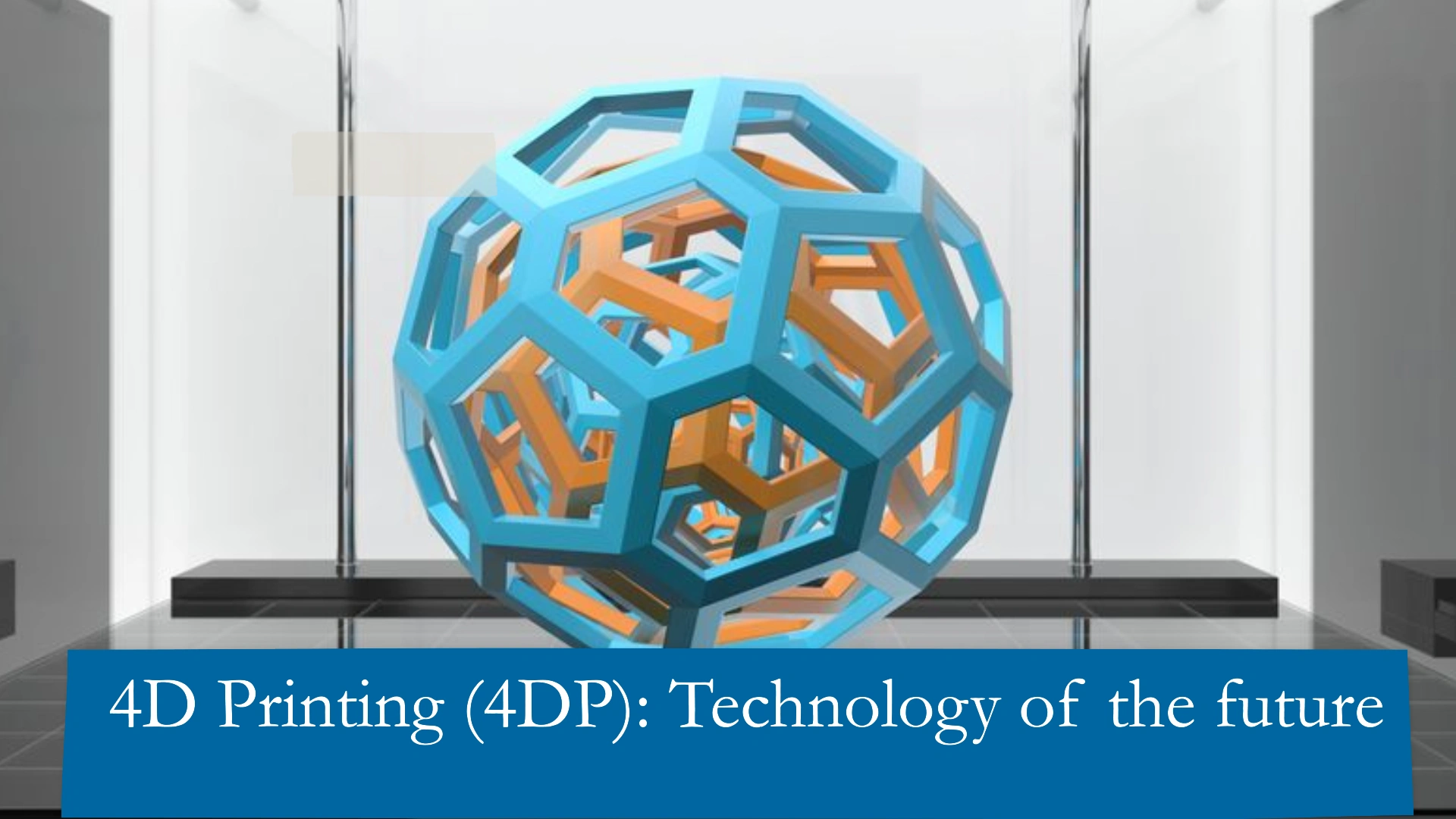
4D Printing (4DP): Technology of the future

Additive Manufacturing or 3D Printing has evolved into a viable, trusted & tangible, technological alternative to a host of traditional manufacturing & fabrication methods. However, lurking in the shadows of this technology, a new development is slowly & steadily acquiring shape & potential to disrupt major industries in a far more radical way than 3D Printing has done so far. Adding the ‘fourth’ dimension of ‘Time’ to the usual three dimensions of length, breadth & height, in an additive manufacturing process has resulted in the discovery of ‘4D Printing’.The question of ‘what is 4D Printing?’ can hence be answered as follows: Printing, manufacturing or fabricating objects, tools, parts, in a way that allows them to alter shape, size, form & structure, due to external influences in form of energy, like light, temperature or other environmental stimuli, is known as 4D Printing. Majority of research in 4DP is dedicated to combining ‘technology & design’, aimed at inventing self-assembling & programmable material technologies, which have the potential to revolutionize Construction, Manufacturing, product performance & assembly.Differentiating between 3DP (3D Printing) & 4DP is hence simple. 3DP works by printing layer upon layer of material of a 2D structure, in a path from the bottom to the top, generating a 3D volume or object. 4DP repeats the same process, however, the difference is the materials used to print these objects. 4DP requires advanced & specially programmed materials that change shape & structure, in response to any changes in their environments. One example of these advanced & programmable materials is a Shape Memory Polymer (SMP). SMPs have the ability of large-scale elastic deformation, in response to environmental stimuli. Figure 1 shows us an example of this phenomenon. When a certain change in temperature is induced, the 4D printed inanimate flower object; made of SMP material, changes shape in response to rising temperatures. As is evident in Figure 1, different levels of temperature changes, induce different deformations of the structure.Different smart printing materials can be used to deliver desired changes in model structures. SMPs as shown in Figure 1, work on the mechanism of the Shape Memory Effect (SME). They fall under the category of Thermo Responsive Materials: materials that change size, shape when thermal energy is applied as a stimulus. Various such materials are currently being developed, namely Shape Memory Alloys (SMA), Shape Memory Hybrids (SMH), Shape Memory Ceramics (SMC), and Shape Memory Gels (SMG). SMPs are currently the preferred materials for 4DP, as they are currently far easier to develop & print with. 

Read more
image
Advantages of 4D Printing

4D printing, a technology based on 3D printing models using smart, programmable materials has the potential to disrupt multiple industries. In our last blog, on 4D printing: The Technology of the Future, we outlined the differences between 3D & 4D printing. We now will explore the advantages 4D printing promises, across different fields, if applied & implemented successfully.One clear advantage provided by 4D printing is computational folding. Models or parts, too large for a 3D printer to print, can be printed in their secondary forms, thanks to the smart & programmable materials used in 4D printing methods. Smart materials like Shape Memory Polymers, Shape Memory Alloys, Hydrogels, are few amongst a host of new materials being researched & developed, promising models that adapt forms in response to different stimuli of light, moisture, magnetic & electric currents. In some cases, especially where programmable Hydrogels are used, 4D printing promises an almost 90% of reduction in volume. Shape Memory Effect (SME), a phenomenon that enables materials to remember their shape under certain conditions, helps & promises, objects that can remember & assume their programmed shapes for a given set of conditions. Parts & models printed with the SME are bound to revolutionize the medical industry. Implants that fit any body structure are a well awaited addition. 4D printing can also create devices that will release medicine under preprogrammed conditions. Any rise in temperature of the body can trigger these devices to intelligently determine the person has contracted fever & administer doses of relevant drugs.  printing applications get more complex than above examples. We can imagine pipes, that carry water, the most important life supporting material on the planet, 4D printed to perform various adaptations. Using smart materials can enable dynamic pipes, to be 4D printed, adjusting their diameters to flow rates & water demand in a certain region. These can also be programmed to ‘heal’ themselves, in case of damage, ensuring minimum wastage of water.The Furniture industry is currently facing a barrier in adoption of 3D printing, as many of the objects involved are huge in comparison to 3D printer sizes. 4D printing, can enable simple shapes to be printed, that can change form & shape by adding light or water. Thus, a simple plain piece of ‘smart’ wood, 4D printed, can become a sofa, a chair, or a bed, by adding water or light to it. 4D printing also promises to change the face of the fashion industry. Clothes that adapt to weather conditions, are being researched. Shoes that can shape based on the activity being undertaken, can promise custom levels of comfort & ergonomics. Construction of structures like buildings, bridges & roads that build themselves is a dream application of 4D printing. Reduction in labor cost, time involved in building projects, is a foreseeable advantage here. Add the ability to ‘self-repair’ thanks to innovative constriction materials & 4D printing may lead to indestructible transport systems that are immune to various physical & natural disasters.  4D printing is now a technology that is being considered with serious thought, by experts in various fields. From shape changing furniture, to implants that fit any body type & selfhealing pipes, self-adapting clothing to bridges that build themselves, 4D printing promises real life magic with discernable advantages in terms of cost, material & time efficiencies. 

Read more
image
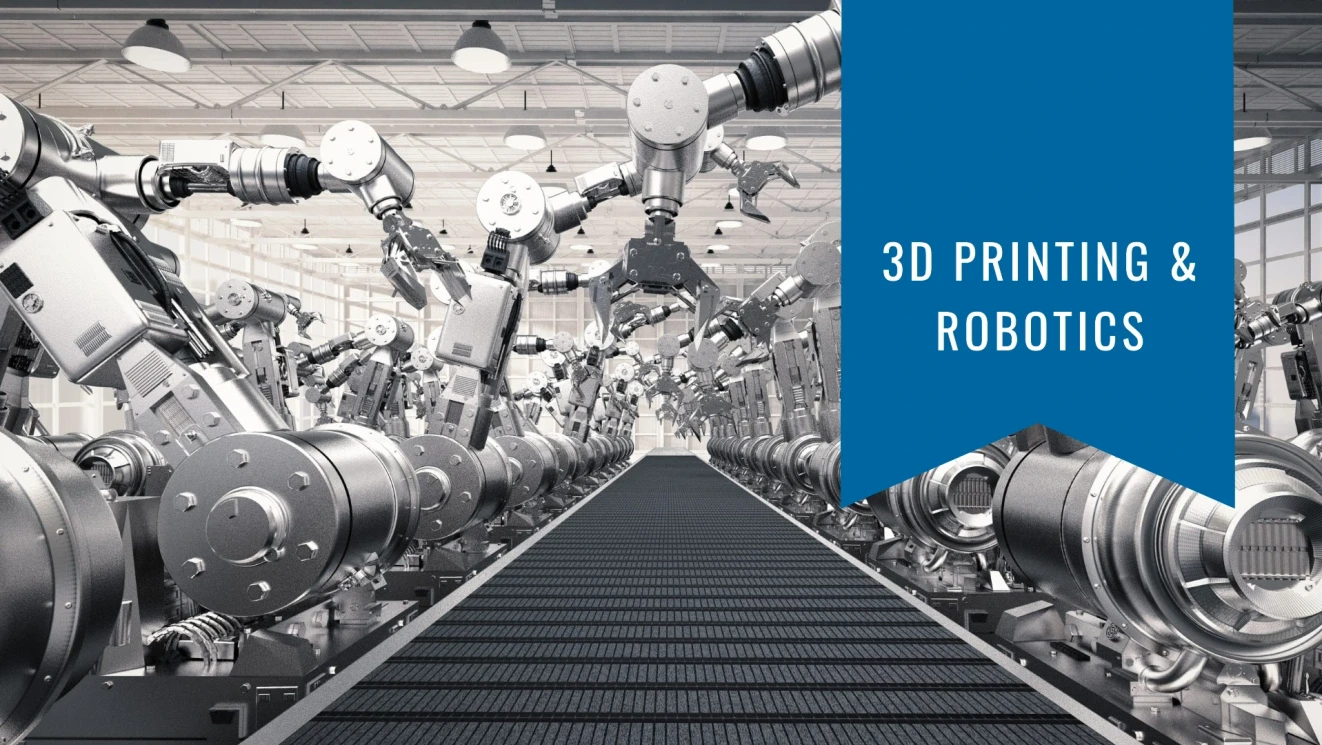
3D Printing & Robotics

Traditional manufacturing methods have witnessed disruptions in the recent decades, in the form of either robotics or 3D printing (3DP). A convergence of these disruptive technologies, however, promises to change the future of Robotics & other industries as well.Companies engaged in manufacturing robots stand to benefit greatly from the inclusion of 3DP, in their business processes. Since most robots are required for unique applications, the ability of 3DP helps by speeding-up prototyping. This rapid prototyping helps designers, test new models faster & customize them according to customer or application requirement faster. The result, customized robots can be made available in the market faster, due to a faster product design process. 3DP can also help mass produce customized robot designs & meet the rising demand for higher personalization with relative ease.Robots, being often used for specific applications, require special tools for manufacturing them as well. This requirement of special tools to manufacture robotic parts with complex geometries, is readily fulfilled by 3D printing them. Different custom parts, for varied applications of the same robot can hence be easily created, by 3D printing them. Design engineers can not only 3D print tooling & fixtures for the robotic assembly process, but also use Design for Additive Manufacturing (DfAM) for new manufacturing methods. DfAM methods of making tools help reduce overall costs, by reducing the overall number of parts required because of hybrid machinery & processes. Using DfAM in robotic manufacturing helps reduce waste of raw materials, while increasing overall strength & durability of parts by eliminating potential failure points in robot designs. DfAM can also help fabricate entire robots or major parts of robots. With no prerequisite for molds, robots & robotic parts can be produced in smaller volumes, in rapid & economical fashion. Savings in time & money resulting from incorporating 3DP in assembly & manufacturing, can be diverted towards research & innovation to develop better robots. 3DP can also help repair robots with ease. By printing parts that need replacement ‘on-site’ or reverse engineering parts that are expensive to reproduce, repairing damaged robots is made efficient by 3DP. Robotic parts can also be re designed with ease, helping to build & improve on earlier designs. Including 3DP methods in robotic design & manufacturing helps turbocharge the entire supply chain, while making maintenance & repair robots easier. The convergence of these disruptive technologies promises a future of automation & efficiency for a host of industries. 

Read more
image
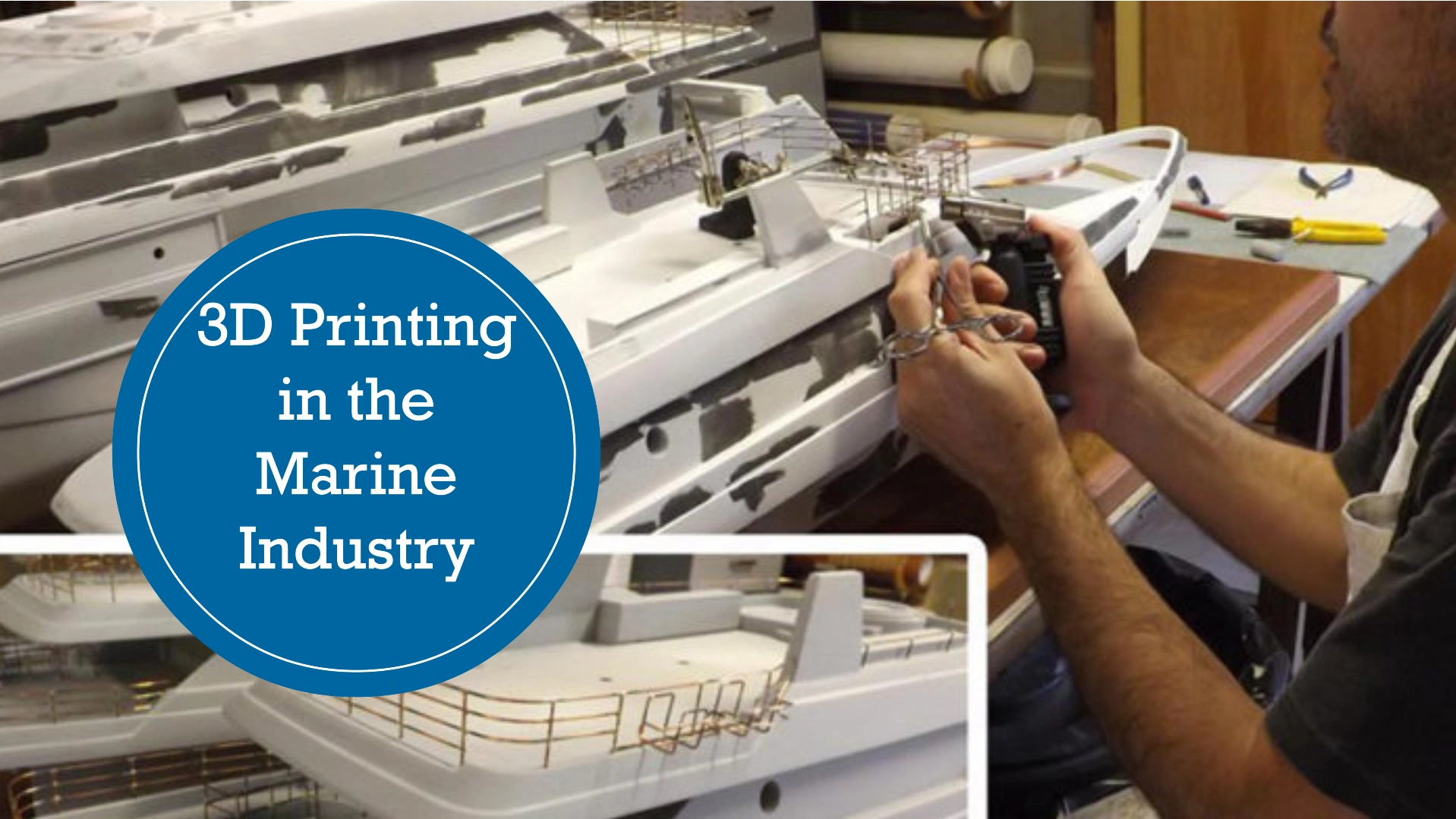
3D Printing in the Marine Industry

3D Printing has been a disruptive force across a wide range of industries for almost a decade. From the Automobile to Aerospace industry, 3D printing has inspired a rethink & reimagination of traditional ways of design, prototyping & manufacturing methods. This disruptive breach can also be seen in the Marine Industry.New Product Development, as usual, is the first victim of this disruption caused by 3DP in the marine industry. Whether it is the design of a ship’s interior or the shape of its hull, virtually designed models of these, can be rapidly 3D printed. Showcasing new designs of a ship’s interior or exterior, based on a certain operational profile, can also be achieved using the speed of 3D printing. 3DP also helps in fabrication of new tools, that can be used in making the actual manufacturing process faster. 3D printed sand molds can be used to make casted impellers, turbines & pump casings.Unleashing the creative side of making ships is not the only advantage 3DP brings to the marine industry. The clinical & rapid manufacturing of parts, using just the right amount of raw material makes it economical, to make custom designs, which under traditional methods would be economically unfeasible. This is particularly relevant in marine operations, where different ships are needed for unique climates & applications, making customization in terms of design & build material paramount. For example, ships intended for long voyages can be built with parts & designs that ensure minimum energy consumption, decreasing overall energy consumption of the ship. This is particularly relevant to aircraft carriers that rely on several nuclear reactors to fuel their voyages. 3D printing is known to reduce weight of parts, by printing whole them whole & making them lighter & stronger in the process. Reducing the weight of ships, by 3D printing major parts whole, allows them to carry more cargo, increasing their utility in a wide range of fields like shipping & defense. Wear & tear is a common occurrence in the marine sector, where ships are exposed to some of the harshest conditions on the planet. 3DP provides the advantage of repair services that are time & application sensitive. Parts of a ship that need replacement, can be 3D printed, in port, in a timely manner, facilitating longer service lives for ships that endure heavy wear & tear.Last but not least, reproducing parts that have been made obsolete, due to high costs associated with high traditional methods, is an easy thing to achieve with 3D printing. By scanning existing models of such parts, 3D printing can reproduce these at a fraction of the original cost & in a faster time frame. Although, 3D printing whole ships is still a distant reality, the infancy of 3D printing in the marine sector is poised to change it forever, upon maturity. The time when fleets will be 3D printed on demand is not far away.  3D Printing & the Marine Industry

Read more
Free Shipping
Fast Delivery
EASY RETURNS
Best Price