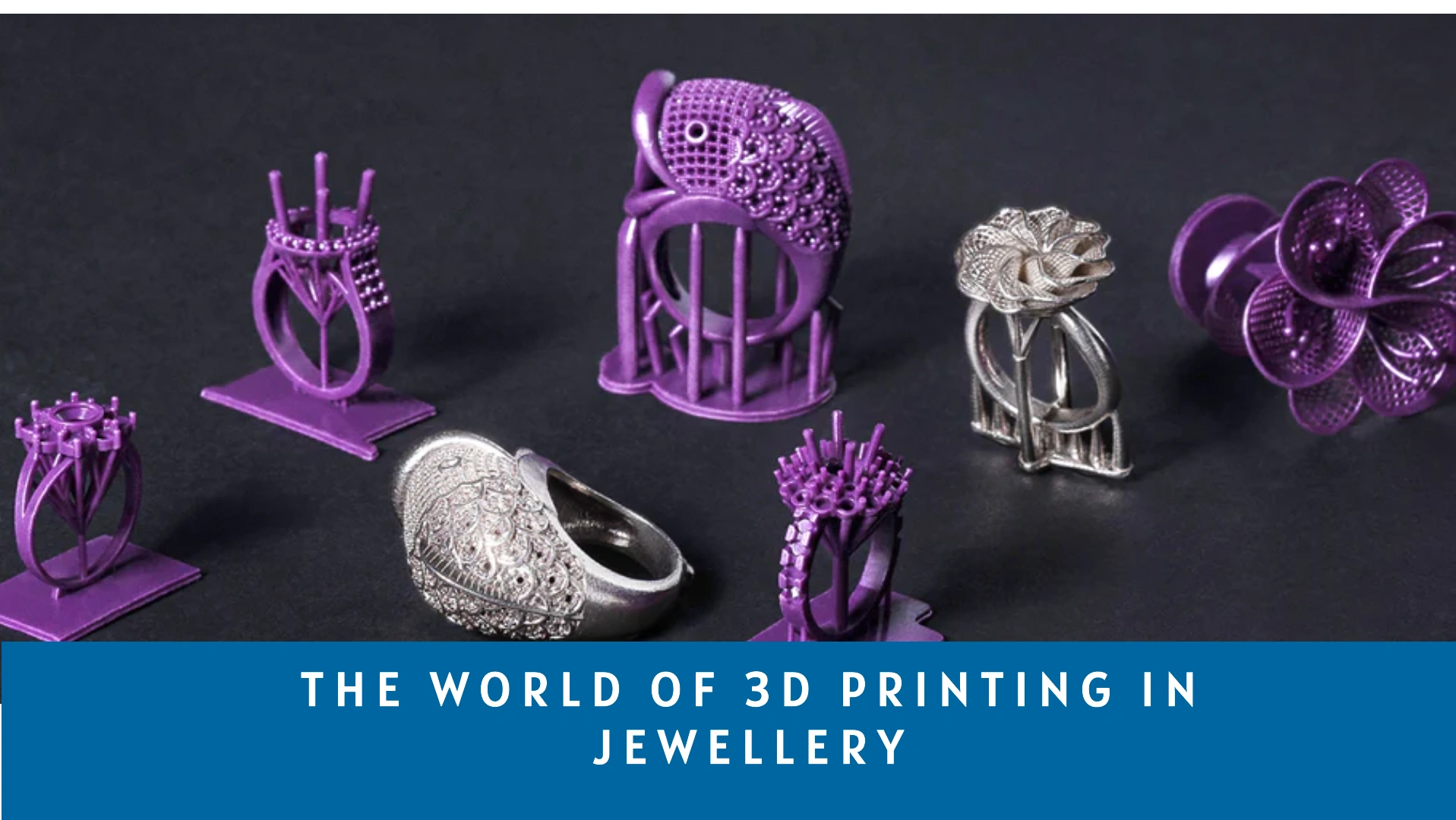
Welcome to the amazing world of 3D printing in jewelry! Technology has changed the way beautiful jewelry is made. 3D printing lets designers create incredibly detailed and unique pieces in a whole new way. It's a mix of old-fashioned skill and new technology, allowing designers to make custom designs and be more eco-friendly. The blog discusses the impact of 3D printing on the jewelry industry, highlighting its influence on design, customization, materials, sustainability, and more. Let's find out how 3D printing is changing jewelry-making and why it's exciting for everyone involved.What makes 3D printing unique in jewelry?3D printing revolutionizes the jewelry-making process in several unique ways, making it stand out from traditional methods:1. Customization: It allows for a high level of customization, enabling designers to create complicated, unique designs that were previously difficult or impossible to achieve through traditional methods. This opens up a world of possibilities for personalized and one-of-a-kind pieces.2. Complex geometries: The technology enables the creation of jewelry with highly complex geometries and intricate details that would be extremely challenging or even impossible to produce using traditional techniques. This offers designers the ability to push the boundaries of creativity and craftsmanship.3. Reduced material waste: Unlike traditional jewelry-making processes that often result in significant material wastage, 3D printing can be more resource-efficient, as it allows for precise material usage, reducing waste and supporting sustainability efforts in the industry.4. Faster prototyping: 3D printing streamlines the prototyping process, allowing designers to quickly iterate and test new designs without the need for extensive manual labor, thus accelerating the product development cycle.5. Accessible production: With 3D printing, jewelry-making becomes more accessible to a broader range of designers and artisans, as the technology reduces the barriers to entry, particularly for those looking to create small-batch or custom pieces.Unleashing Creative Freedom:3D printing gives jewelry designers more freedom to be creative. Unlike traditional methods with certain limitations, it allows designers to imagine and create more complex shapes and intricate details. With the help of computer software, designers can easily bring their ideas to reality. This technology empowers them to go beyond the usual and create jewelry designs that were previously impossible to make using traditional methods. Customization and Personalization:With 3D printing, jewelry can be customized to match each person's style. This means customers can get involved in the design process and ask for exactly what they want, like the size, shape, and placement of gemstones. They can even add personal touches to make the piece truly unique. This way, every jewelry item becomes one-of-a-kind, making it extra special for the person wearing it. Can customers provide design specifics?Yes, customers can actively participate in the design process regarding 3D-printed jewelry. They have the opportunity to provide specific design requirements such as size, shape, gemstone placement, and material preferences, and even incorporate personal elements into their custom piece. This level of customer involvement ensures that each jewelry item is tailored to their unique preferences, making it truly one-of-a-kind and meaningful to the wearer. Can they choose materials?Yes, customers can indeed choose the material for their 3D-printed jewelry. With a wide range of materials available for 3D printing, such as various metals, resins, and even specialty materials like precious metals, customers have the flexibility to select the material that best suits their preferences and requirements. This freedom to choose the material adds another layer of personalization to the jewelry, allowing customers to create pieces that are not only visually stunning but also align with their preferences for durability, aesthetics, and value. Rapid Prototyping and Iterative Design:Making jewelry samples used to be slow and expensive. Now, 3D printing lets designers create quick and exact models. This helps them see how the jewelry looks, make changes, and get it perfect before making a bunch. It saves time, money, and ends with happier customers!How does 3d printing in jewelry production contribute to customer satisfaction? 3D printing in jewelry production contributes to customer satisfaction in several significant ways:1. Customization and Personalization: It enables customers to actively participate in the design process, allowing them to provide specific design requirements and incorporate personal elements into their jewelry pieces. This level of customization ensures that each piece is tailored to the individual's unique preferences, leading to higher customer satisfaction through personalized jewelry. 2. Design Flexibility: With this technology, jewelry designers can create intricate and unique designs that were once unattainable through traditional methods. The ability to produce a diverse range of designs that cater to different tastes and styles increases customer satisfaction by offering a wider selection of options to choose from. 3. Quality Assurance: The iterative design process facilitated by it ensures that jewelry pieces undergo thorough refinement and testing before production, resulting in high-quality, well-crafted items that meet or exceed customer expectations. This commitment to quality contributes to customer satisfaction and trust in the brand. 4. Visual Representation: Through this technology, designers can create precise physical prototypes that provide customers with a realistic representation of the final jewelry piece. This visual representation helps customers make more informed purchasing decisions and fosters confidence in the product they are ordering. 5. Reduced Lead Times: The rapid prototyping capabilities shorten the design and production timeline, allowing customers to receive their customized or personalized jewelry in a more timely manner. This efficiency contributes to customer satisfaction by delivering products within shorter lead times.Material Variety and Innovation:3D printing provides a wide range of materials for making jewelry. In jewelry production, a wide variety of materials can be utilized to create unique and innovative pieces. Some of the common types of materials used include:1. Precious Metals: Gold Silver Platinum 2. Non-Precious Metals: Brass Bronze 3. Resin:Resin materials offer a range of colors and finishes, suitable for intricate designs and detailed pieces.4. Ceramics:Ceramic materials provide a unique look and feel, allowing for the creation of delicate and refined jewelry pieces.5. Composite Materials:Composite materials combine elements to achieve specific properties, enabling designers to experiment with textures and structures.6. Specialty Metals:Materials like titanium or stainless steel can also be used to create modern and durable jewelry pieces.Sustainable and Environmentally Friendly:Jewelry-making can be wasteful! Lots of leftover materials get thrown away. But 3D printing is like a special kind of printer that builds jewelry piece by tiny piece, wasting less material. This cool tech helps make pretty jewelry in a way that's better for the environment!Can you explain layer by layer?Layer-by-layer is a fundamental concept in 3D printing that refers to the systematic process of building an object one thin layer at a time. Here's a detailed explanation of how layer-by-layer printing works in 3D printing:1. Digital Design: The process begins with a digital 3D model of the object that needs to be printed. This design serves as a blueprint for the printer to follow during the printing process.2. Slicing: The 3D model is sliced into numerous horizontal layers by specialized software. Each layer is like a slice showing a different part of the finished object. 3. Printing Process: The 3D printer begins by making the first layer of the object right on the build platform. It does this by depositing or curing the printing material (such as plastic, resin, or metal) in a specific pattern based on the sliced design.4. Layer Bonding: Once the initial layer is completed, the printer moves on to the next layer, building on top of the previous one. The material in each layer fuses or adheres to the layer below it, creating a strong bond between the successive layers.5. Repetition: The printer repeats the process of depositing and solidifying material layer by layer, following the precise instructions from the sliced design. This step-by-step process keeps going until the whole object is finished.6. Complex Structures: Layer-by-layer printing allows for the creation of complex geometries and intricate designs that would be challenging or impossible to achieve with traditional manufacturing methods. Each layer contributes to the overall structure of the object, leading to the gradual formation of the final three-dimensional shape.Can small jewelers afford 3D printers?Yes, small jewelers can afford 3D printers due to the decreasing costs and increasing accessibility of this technology. Entry-level desktop 3D printers are now more affordable, making them within the reach of small-scale businesses. Additionally, some companies offer leasing or financing options, further easing the financial burden of acquiring a 3D printer. The cost of 3D printers continues to decrease as the technology advances, making it increasingly feasible for small jewelers to invest in this transformative manufacturing tool. Quality and Artisanship:3D printing lets designers create amazing and custom jewelry, but it doesn't replace the skills of a jeweler. Many use both techniques! They might 3D print a base, then hand-finish it, set stones perfectly, and polish it for a dazzling final piece. This keeps the best of both worlds: cool designs and top-notch craftsmanship. In summary, the use of 3D printing in jewelry has brought together innovation, accessibility, and traditional craftsmanship. This technology has expanded design possibilities and made jewelry-making more open to everyone. As 3D printing continues to inspire creativity and reshape the jewelry industry, we see a bright future where modern technology and timeless artistry come together. This marks an important moment in the industry's history, where the past and the present join forces, offering endless potential and creativity in the world of jewelry.
Blogs
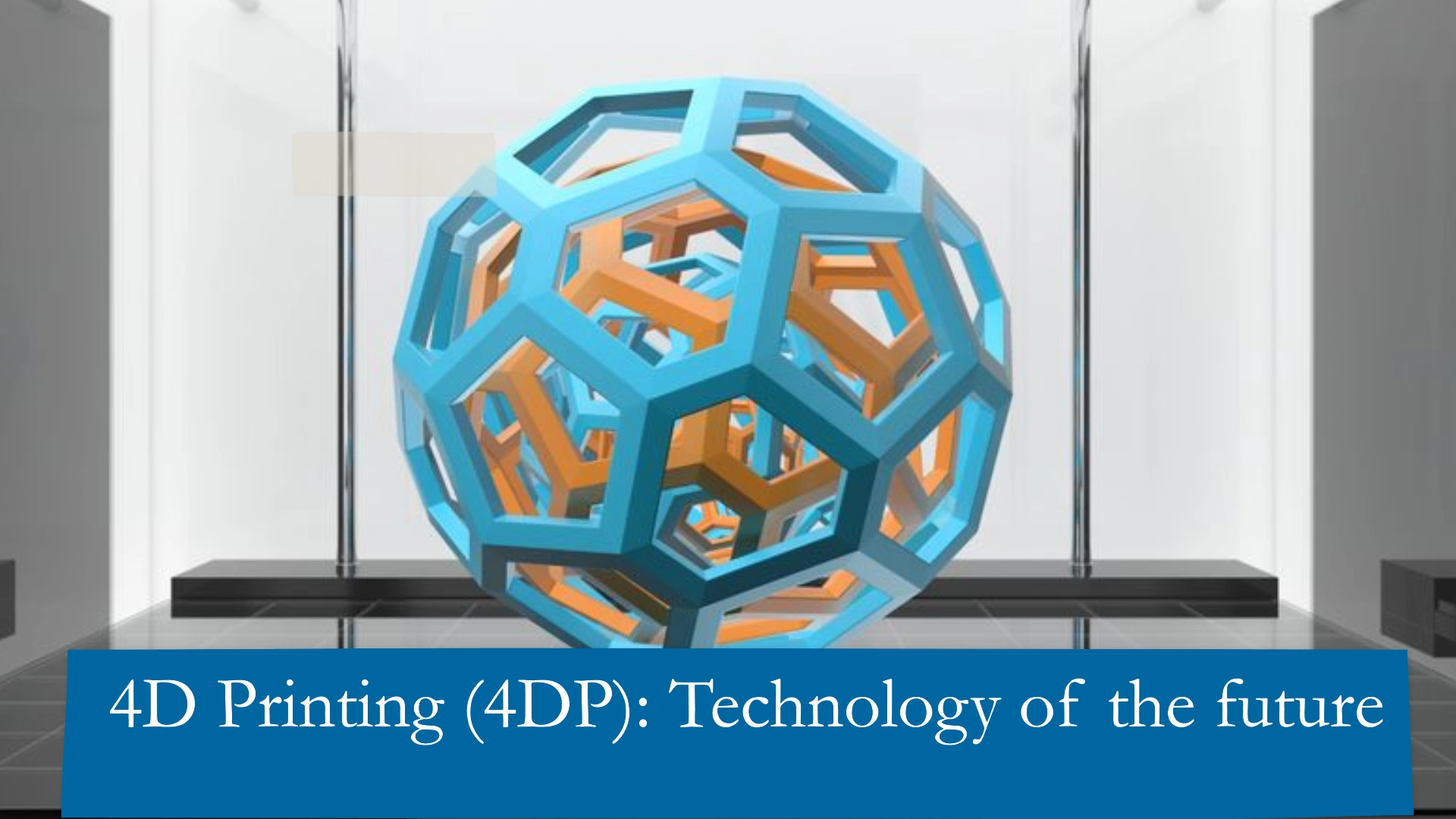
Additive Manufacturing or 3D Printing has evolved into a viable, trusted & tangible, technological alternative to a host of traditional manufacturing & fabrication methods. However, lurking in the shadows of this technology, a new development is slowly & steadily acquiring shape & potential to disrupt major industries in a far more radical way than 3D Printing has done so far. Adding the ‘fourth’ dimension of ‘Time’ to the usual three dimensions of length, breadth & height, in an additive manufacturing process has resulted in the discovery of ‘4D Printing’.The question of ‘what is 4D Printing?’ can hence be answered as follows: Printing, manufacturing or fabricating objects, tools, parts, in a way that allows them to alter shape, size, form & structure, due to external influences in form of energy, like light, temperature or other environmental stimuli, is known as 4D Printing. Majority of research in 4DP is dedicated to combining ‘technology & design’, aimed at inventing self-assembling & programmable material technologies, which have the potential to revolutionize Construction, Manufacturing, product performance & assembly.Differentiating between 3DP (3D Printing) & 4DP is hence simple. 3DP works by printing layer upon layer of material of a 2D structure, in a path from the bottom to the top, generating a 3D volume or object. 4DP repeats the same process, however, the difference is the materials used to print these objects. 4DP requires advanced & specially programmed materials that change shape & structure, in response to any changes in their environments. One example of these advanced & programmable materials is a Shape Memory Polymer (SMP). SMPs have the ability of large-scale elastic deformation, in response to environmental stimuli. Figure 1 shows us an example of this phenomenon. When a certain change in temperature is induced, the 4D printed inanimate flower object; made of SMP material, changes shape in response to rising temperatures. As is evident in Figure 1, different levels of temperature changes, induce different deformations of the structure.Different smart printing materials can be used to deliver desired changes in model structures. SMPs as shown in Figure 1, work on the mechanism of the Shape Memory Effect (SME). They fall under the category of Thermo Responsive Materials: materials that change size, shape when thermal energy is applied as a stimulus. Various such materials are currently being developed, namely Shape Memory Alloys (SMA), Shape Memory Hybrids (SMH), Shape Memory Ceramics (SMC), and Shape Memory Gels (SMG). SMPs are currently the preferred materials for 4DP, as they are currently far easier to develop & print with.

4D printing, a technology based on 3D printing models using smart, programmable materials has the potential to disrupt multiple industries. In our last blog, on 4D printing: The Technology of the Future, we outlined the differences between 3D & 4D printing. We now will explore the advantages 4D printing promises, across different fields, if applied & implemented successfully.One clear advantage provided by 4D printing is computational folding. Models or parts, too large for a 3D printer to print, can be printed in their secondary forms, thanks to the smart & programmable materials used in 4D printing methods. Smart materials like Shape Memory Polymers, Shape Memory Alloys, Hydrogels, are few amongst a host of new materials being researched & developed, promising models that adapt forms in response to different stimuli of light, moisture, magnetic & electric currents. In some cases, especially where programmable Hydrogels are used, 4D printing promises an almost 90% of reduction in volume. Shape Memory Effect (SME), a phenomenon that enables materials to remember their shape under certain conditions, helps & promises, objects that can remember & assume their programmed shapes for a given set of conditions. Parts & models printed with the SME are bound to revolutionize the medical industry. Implants that fit any body structure are a well awaited addition. 4D printing can also create devices that will release medicine under preprogrammed conditions. Any rise in temperature of the body can trigger these devices to intelligently determine the person has contracted fever & administer doses of relevant drugs. printing applications get more complex than above examples. We can imagine pipes, that carry water, the most important life supporting material on the planet, 4D printed to perform various adaptations. Using smart materials can enable dynamic pipes, to be 4D printed, adjusting their diameters to flow rates & water demand in a certain region. These can also be programmed to ‘heal’ themselves, in case of damage, ensuring minimum wastage of water.The Furniture industry is currently facing a barrier in adoption of 3D printing, as many of the objects involved are huge in comparison to 3D printer sizes. 4D printing, can enable simple shapes to be printed, that can change form & shape by adding light or water. Thus, a simple plain piece of ‘smart’ wood, 4D printed, can become a sofa, a chair, or a bed, by adding water or light to it. 4D printing also promises to change the face of the fashion industry. Clothes that adapt to weather conditions, are being researched. Shoes that can shape based on the activity being undertaken, can promise custom levels of comfort & ergonomics. Construction of structures like buildings, bridges & roads that build themselves is a dream application of 4D printing. Reduction in labor cost, time involved in building projects, is a foreseeable advantage here. Add the ability to ‘self-repair’ thanks to innovative constriction materials & 4D printing may lead to indestructible transport systems that are immune to various physical & natural disasters. 4D printing is now a technology that is being considered with serious thought, by experts in various fields. From shape changing furniture, to implants that fit any body type & selfhealing pipes, self-adapting clothing to bridges that build themselves, 4D printing promises real life magic with discernable advantages in terms of cost, material & time efficiencies.
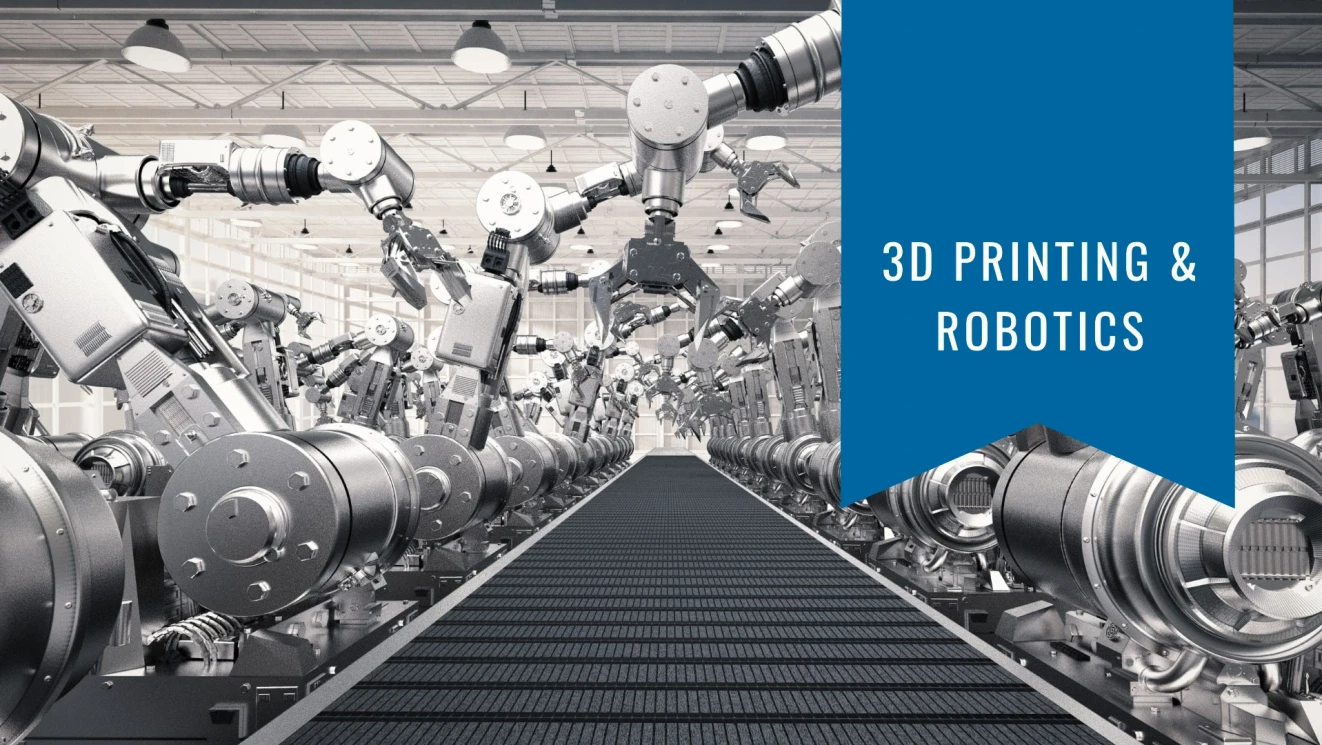
Traditional manufacturing methods have witnessed disruptions in the recent decades, in the form of either robotics or 3D printing (3DP). A convergence of these disruptive technologies, however, promises to change the future of Robotics & other industries as well.Companies engaged in manufacturing robots stand to benefit greatly from the inclusion of 3DP, in their business processes. Since most robots are required for unique applications, the ability of 3DP helps by speeding-up prototyping. This rapid prototyping helps designers, test new models faster & customize them according to customer or application requirement faster. The result, customized robots can be made available in the market faster, due to a faster product design process. 3DP can also help mass produce customized robot designs & meet the rising demand for higher personalization with relative ease.Robots, being often used for specific applications, require special tools for manufacturing them as well. This requirement of special tools to manufacture robotic parts with complex geometries, is readily fulfilled by 3D printing them. Different custom parts, for varied applications of the same robot can hence be easily created, by 3D printing them. Design engineers can not only 3D print tooling & fixtures for the robotic assembly process, but also use Design for Additive Manufacturing (DfAM) for new manufacturing methods. DfAM methods of making tools help reduce overall costs, by reducing the overall number of parts required because of hybrid machinery & processes. Using DfAM in robotic manufacturing helps reduce waste of raw materials, while increasing overall strength & durability of parts by eliminating potential failure points in robot designs. DfAM can also help fabricate entire robots or major parts of robots. With no prerequisite for molds, robots & robotic parts can be produced in smaller volumes, in rapid & economical fashion. Savings in time & money resulting from incorporating 3DP in assembly & manufacturing, can be diverted towards research & innovation to develop better robots. 3DP can also help repair robots with ease. By printing parts that need replacement ‘on-site’ or reverse engineering parts that are expensive to reproduce, repairing damaged robots is made efficient by 3DP. Robotic parts can also be re designed with ease, helping to build & improve on earlier designs. Including 3DP methods in robotic design & manufacturing helps turbocharge the entire supply chain, while making maintenance & repair robots easier. The convergence of these disruptive technologies promises a future of automation & efficiency for a host of industries.
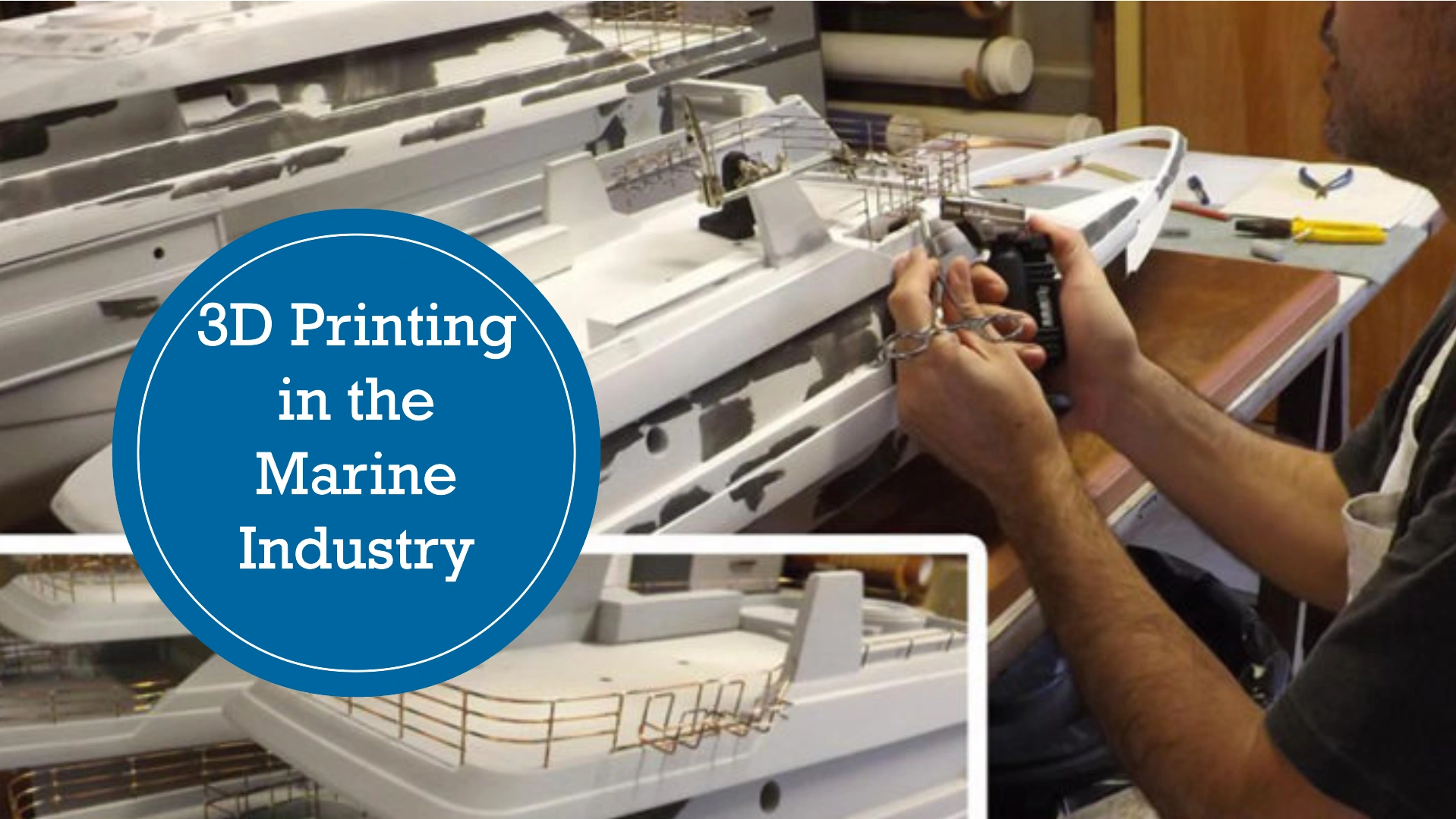
3D Printing has been a disruptive force across a wide range of industries for almost a decade. From the Automobile to Aerospace industry, 3D printing has inspired a rethink & reimagination of traditional ways of design, prototyping & manufacturing methods. This disruptive breach can also be seen in the Marine Industry.New Product Development, as usual, is the first victim of this disruption caused by 3DP in the marine industry. Whether it is the design of a ship’s interior or the shape of its hull, virtually designed models of these, can be rapidly 3D printed. Showcasing new designs of a ship’s interior or exterior, based on a certain operational profile, can also be achieved using the speed of 3D printing. 3DP also helps in fabrication of new tools, that can be used in making the actual manufacturing process faster. 3D printed sand molds can be used to make casted impellers, turbines & pump casings.Unleashing the creative side of making ships is not the only advantage 3DP brings to the marine industry. The clinical & rapid manufacturing of parts, using just the right amount of raw material makes it economical, to make custom designs, which under traditional methods would be economically unfeasible. This is particularly relevant in marine operations, where different ships are needed for unique climates & applications, making customization in terms of design & build material paramount. For example, ships intended for long voyages can be built with parts & designs that ensure minimum energy consumption, decreasing overall energy consumption of the ship. This is particularly relevant to aircraft carriers that rely on several nuclear reactors to fuel their voyages. 3D printing is known to reduce weight of parts, by printing whole them whole & making them lighter & stronger in the process. Reducing the weight of ships, by 3D printing major parts whole, allows them to carry more cargo, increasing their utility in a wide range of fields like shipping & defense. Wear & tear is a common occurrence in the marine sector, where ships are exposed to some of the harshest conditions on the planet. 3DP provides the advantage of repair services that are time & application sensitive. Parts of a ship that need replacement, can be 3D printed, in port, in a timely manner, facilitating longer service lives for ships that endure heavy wear & tear.Last but not least, reproducing parts that have been made obsolete, due to high costs associated with high traditional methods, is an easy thing to achieve with 3D printing. By scanning existing models of such parts, 3D printing can reproduce these at a fraction of the original cost & in a faster time frame. Although, 3D printing whole ships is still a distant reality, the infancy of 3D printing in the marine sector is poised to change it forever, upon maturity. The time when fleets will be 3D printed on demand is not far away. 3D Printing & the Marine Industry